


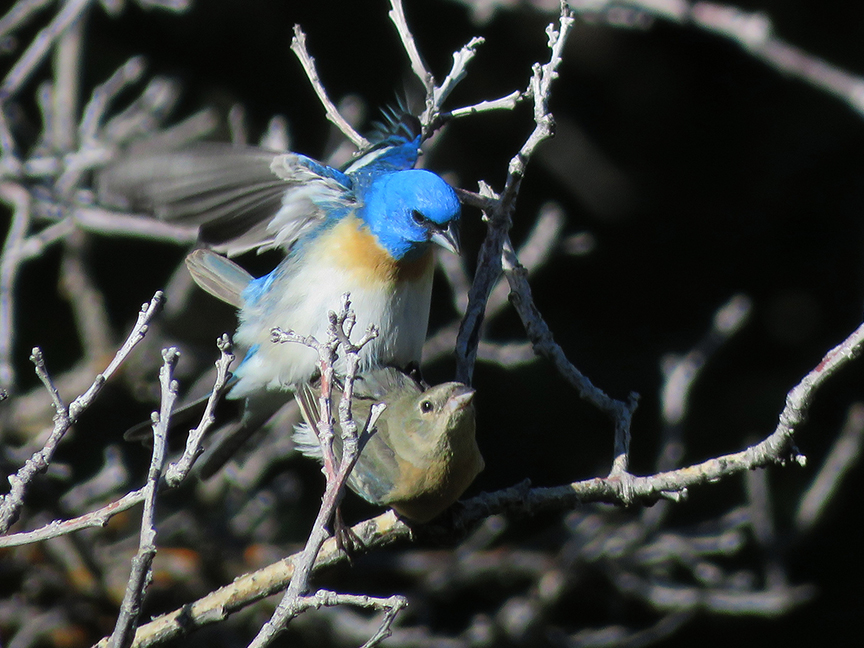
Birding is a little slower now than it was a couple weeks ago. Oh, there’re plenty of wild birds about—singing, calling, flitting around—but they’re less obvious, more secretive. They’ve got other thoughts on their mind.
In fact, I’m guessing that most of the resident species either have eggs to incubate, nestings to feed, or fledglings to bring to adulthood. But this morning I happened upon at least one couple of buntings with a nest in need of eggs—right in broad daylight.
Meanwhile, the grosbeak parents are still jamming regurgitated food rather roughly down the throats of their tiny new-hatched nestlings. (Guessing their wide beaks make it something of a challenge.) Gnatcatchers, scrub-jays, and magpies (at least) have fledglings to raise.
Busy times for all.
Grandeur Peak Area List
Beginning at 8:45 a.m., I hiked a few hundred feet up a mountain.
1. Black-billed Magpie*
2. Lazuli Bunting
3. American Robin* (v)
4. Black-chinned Hummingbird
5. Blue-gray Gnatcatcher (v)
6. Lesser Goldfinch** (v)
7. Black-headed Grosbeak
8. Black-capped Chickadee (v)
9. California Quail*
10. Pine Siskin
11. Spotted Towhee
12. Woodhouse’s Scrub-jay*
13. House Finch*
14. Cliff Swallow
15. Black-throated Gray Warbler (v)
16. Warbling Vireo
17. Chukar (v)
18. Chipping Sparrow (v)
19. Orange-crowned Warbler (v)
20. Mourning Dove*
21. Downy Woodpecker
Elsewhere
22. Eurasian Collared Dove
23. Song Sparrow
24. European Starling
25. Rock Pigeon
Mammals
None
(v) Voice only
*Also elsewhere
**Voice only elsewhere
Tags: American robin, black-billed magpie, black-capped chickadee, black-chinned hummingbird, black-headed grosbeak, black-throated gray warbler, blue-gray gnatcatcher, California quail, chipping sparrow, chukar, cliff swallow, downy woodpecker, Eurasian collared dove, European starling, house finch, lazuli bunting, lesser goldfinch, mourning dove, Orange-crowned Warbler, pine siskin, rock pigeon, song sparrow, spotted towhee, warbling vireo, Woodhouse’s scrub jay

