


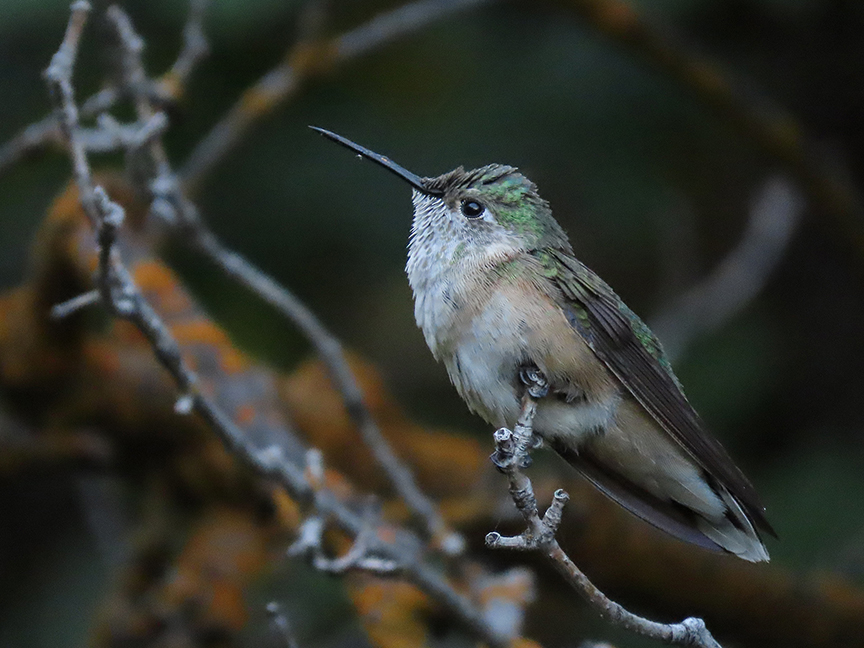
In these quiet summer mornings, one tiny terror stands out: the hummingbird.
I shouldn’t say “tiny terror,” because hummingbirds are just doing Nature’s bidding, but the two prominent species where dog and I hike each morning—black-chinned and broad-tailed—are (as are most hummers) brave, pugnacious, fast, alert, and determined.
For the past many days, we’ve been tailed (and/or led) by super-territorial male Broad-winged Hummingbirds—led away from the young ’uns, I assume. Many broad-wings today, of both sexes. But also many black-chinned (although they’re not perching up high and conspicuous at this time of year).
You hear their wings, see them chasing each other all over the place (at what would be many hundreds of miles an hour if we were their size).
Whatever hazards these little guys confront each year, they sure as heck don’t back down.
Grandeur Peak Area List
Beginning at 8 a.m., I hiked a few hundred feet up a mountain.
1. Woodhouse’s Scrub-jay
2. Mourning Dove
3. Rock Pigeon
4. Black-chinned Hummingbird
5. Lazuli Bunting
6. Eurasian Collared Dove
7. House Finch*
8. Spotted Towhee
9. Blue-gray Gnatcatcher
10. Black-capped Chickadee
11. Broad-tailed Hummingbird
12. Lesser Goldfinch* (v)
13. American Robin
14. Cooper’s Hawk
15. Virginia’s Warbler
Elsewhere
16. California Quail
Mammals
Red Squirrel (v)
Rock Squirrel
(v) Voice only
*Also elsewhere
**Voice only elsewhere
Tags: American robin, black-capped chickadee, black-chinned hummingbird, blue-gray gnatcatcher, broad-tailed hummingbird, California quail, cooper's hawk, Eurasian collared dove, house finch, lazuli bunting, lesser goldfinch, mourning dove, red squirrel, rock pigeon, rock squirrel, spotted towhee, Virginia’s warbler, Woodhouse’s scrub jay

