


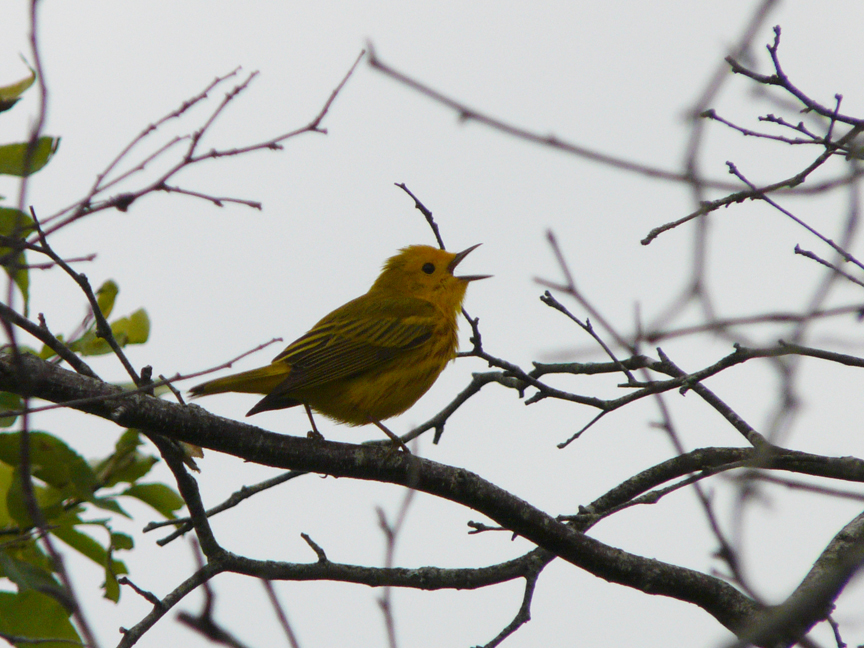
Yellow warbler.
Walking with my dog early this morning on Beech Hill, I heard the loud, sharp call of a wild turkey. Except it was too loud, too sharp—sort of mechanical-sounding, actually. Considering Maine’s spring turkey season runs from 03 May through 05 June, I figured it wasn’t a turkey at all. It was a human intending to sound like a turkey using some sort of artificial device. A turkey call—which, oddly, was coming from an area well beyond the sign that declares, “No Hunting Beyond This Point.” So we marched conspicuously back and forth along the open stretch of trail for a while, dog and I, in hopes the hunters would catch sight of us. And I didn’t put wild turkey on my Beech Hill list today.
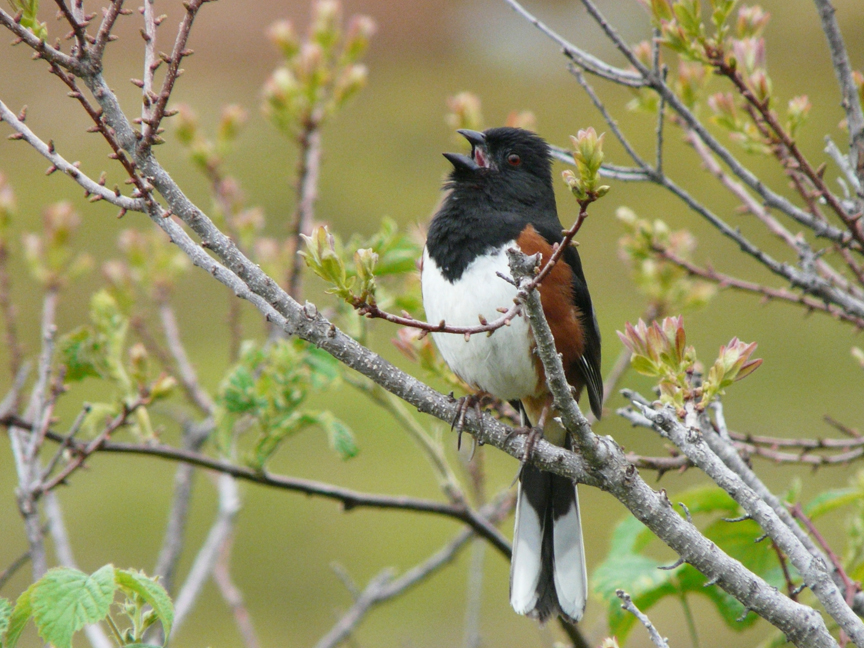
Eastern towhee.
I did, however, put 41 other species on there. The most I’ve counted any day at Beech Hill this year.
Our two-hour hike began inauspiciously enough: the usual ovenbird, crow, b-t green warbler, chickadee, etc. The day was overcast but not too cool or windy. Mosquitoes became apparent right away. And before we’d gone a hundred yards, I’d counted eight or ten species already. Including a rose-breasted grosbeak and drumming partridge. Many warblers (11 total), many sparrows (5), a flicker in the tip of a spruce at the summit. And down at the base of the open trail, on the other side of the hill from our starting point, I heard the ee-o-lay! of a wood thrush. First of the year.
I was a bit distracted, however, by the odd call I’d heard coming from a little grove of poplar on the south slope of the open trail: a loud, steady, rapid warble on an even pitch, ending in a sort of hiccup. I’d never heard a song like that. Was it a warbler? Some grassland bird? On our way back up, I heard the song again—and decided to veer off-trail to attempt an ID. We ducked under the twine, dog and I, and carefully made our way down to the poplar grove (careful to disturb no nesting birds). I turned my binoculars in that direction but saw only a yellowthroat, which I’d also heard singing. Yellowthroat, yellow warbler, towhee, field sparrow, and this crazy, unfamiliar warble. We kept sneaking closer. As I focused on the yellowthroat a few feet from the edge of the shady grove, the call came again—just as the yellowthroat opened its mouth and began to sing.
It was the yellowthroat.
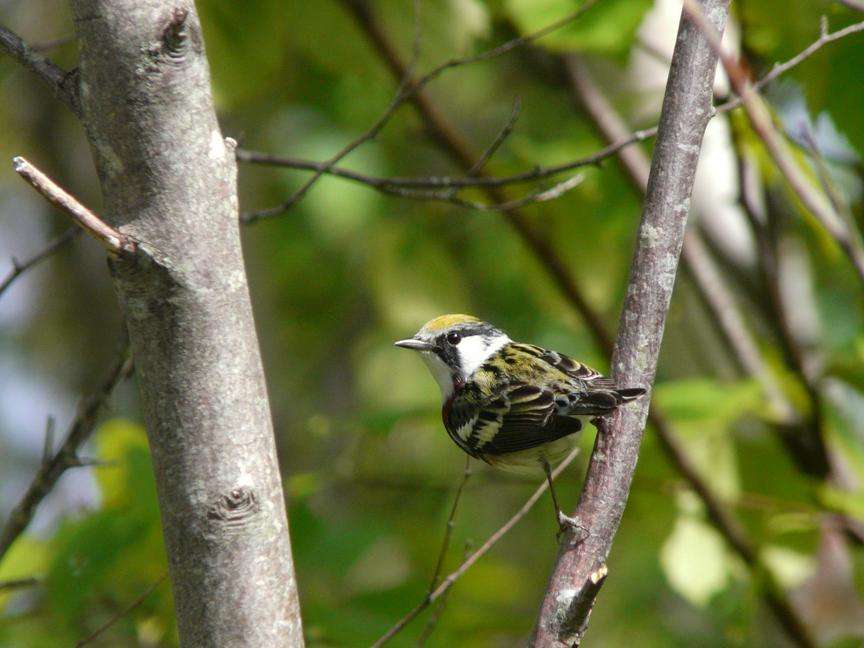
Chestnut-sidsed warbler.
I felt a mix of disappointment and excitement. Not new species, but a crazy, freak-of-nature call by this yellowthroat. Was it some alternate song, like chestnut-sided warblers sing later in the year, that I’d somehow missed in my thirty years of birding? Was this yellowthroat raised by gypsies? I’ve heard freak songs before—notably, the crazy calls of some white-throated sparrows—but this one really surprised me. I even looked up other yellowthroat species thinking maybe it was a vagrant. Apparently not.
Nice to hear prairie warblers again—several of them today. And Nashville’s are unusually common this year. Still no hummingbirds, which bothers me—though I imagine they’re just late.
Incidentally, I’ve forgotten to mention in the last few reports that crickets are out. I heard my first of the year a few nights ago out back at Glen Cove. On the hill today, in the misty overcast—the day turned out to be a classic partly cloudy one, with a brief but heavy late-morning shower—I heard several.
All the way back up over the hill, my count hovered at thirty-nine species, No. 39 being a waxwing I heard down at Beech Hill Road. But coming down the lower wooded trail, I heard the eponymous note of a veery—last of the resident thrushes. And then came the classic call of a tanager from somewhere down the hill through the trees.
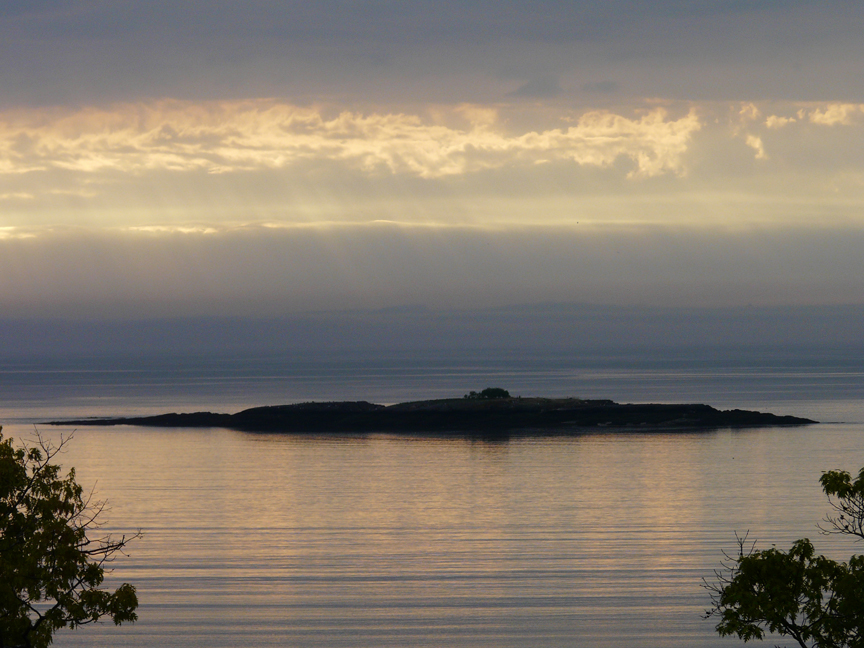
Sunrise over Clam Cove.
Beech Hill List
At 6:45 a.m., I walked all trails.
1. Ovenbird
2. American crow
3. Black-throated green warbler (voice)
4. Black-capped chickadee
5. Tufted titmouse (voice)
6. American robin
7. Common yellowthroat
8. Rose-breasted grosbeak (voice)
9. Ruffed grouse (drumming)
10. Chestnut-sided warbler
11. American redstart (voice)
12. American goldfinch
13. Eastern towhee
14. Mourning dove
15. Gray catbird
16. Northern parula (voice)
17. White-throated sparrow (voice)
18. Blue jay
19. Herring gull (voice)
20. Yellow warbler
21. Nashville warbler
22. Black-and-white warbler
23. Field sparrow (voice)
24. Song sparrow
25. Tree swallow
26. Prairie warbler (voice)
27. Eastern phoebe
28. Savannah sparrow
29. Northern flicker
30. Common raven
31. Hermit thrush (voice)
32. Pileated woodpecker (voice)
33. Wood thrush (voice)
34. Blue-headed vireo (voice)
35. Chipping sparrow (voice)
36. Black-throated blue warbler (voice)
37. Great crested flycatcher (voice)
38. Red-eyed vireo (voice)
39. Cedar waxwing (voice)
40. Veery (voice)
41. Scarlet tanager (voice)
Elsewhere
42. Rock pigeon
43. Osprey
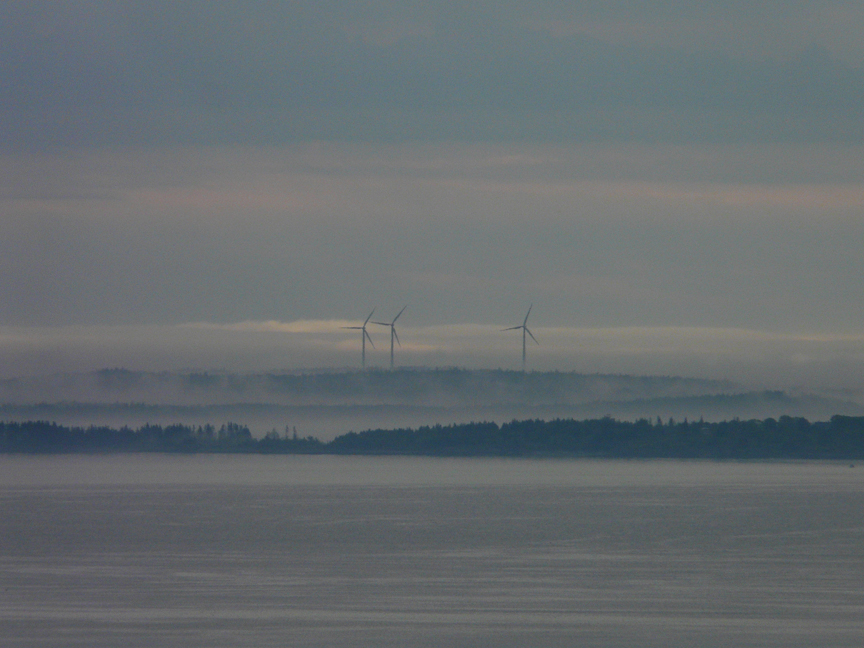
Wind generators, Vinalhaven.
Tags: American crow, American goldfinch, American redstart, American robin, black-and-white warbler, black-capped chickadee, black-throated blue warbler, black-throated green warbler, blue jay, blue-headed vireo, chestnut-sided warbler, chipping sparrow, common raven, common yellowthroat, eastern phoebe, eastern towhee, gray catbird, hermit thrush, herring gull, mourning dove, Nashville warbler, northern flicker, northern parula, ovenbird, pileated woodpecker, prairie warbler, red-eyed vireo, rose-breasted grosbeak, ruffed grouse, savannah sparrow, scarlet tanager, song sparrow, tree swallow, tufted titmouse, veery, white-throated sparrow, wood thrush, yellow warbler

