


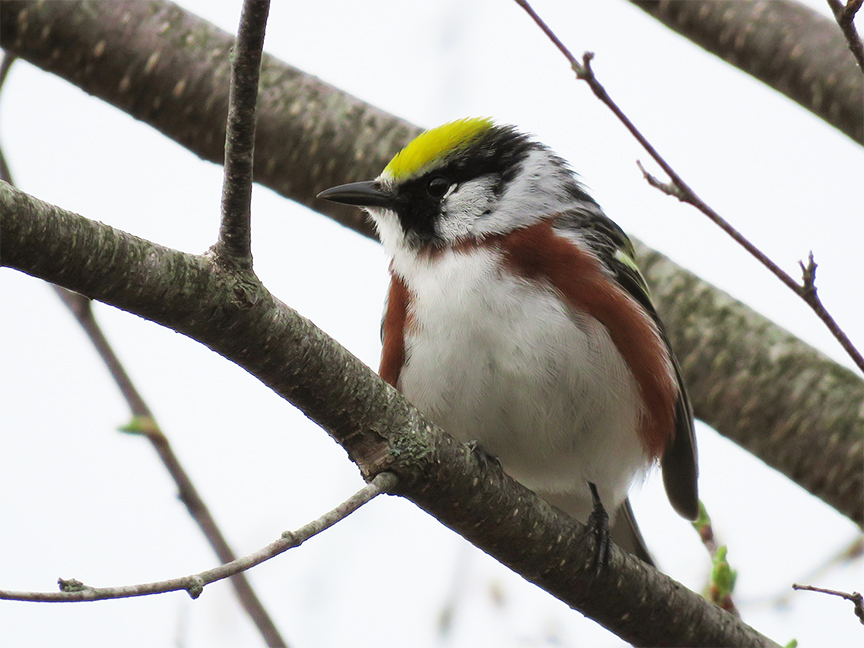
Chestnut-sided Warblers are a common species at Beech Hill—perhaps the most common nesting species. But I’ve missed them this chilly spring. They were rather late to arrive.
Now, however, they’re back in respectable numbers. Which comforts me.
Beech Hill List
Beginning at 7:15 a.m., I hiked all trails.
1. American Robin* (v)
2. Ovenbird
3. Black-throated Green Warbler
4. Black-capped Chickadee
5. White-breasted Nuthatch (v)
6. Northern Parula
7. Black-and-white Warbler
8. Eastern Towhee
9. Gray Catbird
10. Blue-headed Vireo
11. Hermit Thrush
12. American Goldfinch**
13. Blue Jay*
14. Purple Finch (v)
15. Nashville Warbler (v)
16. Chestnut-sided Warbler**
17. Common Yellowthroat**
18. Eastern Towhee
19. Field Sparrow
20. Song Sparrow**
21. Yellow Warbler
22. Tree Swallow
23. American Kestrel
24. Rose-breasted Grosbeak (v)
25. American Crow*
26. Eastern Phoebe**
27. Tufted Titmouse (v)
28. White-throated Sparrow (v)
29. Black-throated Blue Warbler
30. Common Raven
31. Yellow-rumped Warbler
32. Northern Flicker (v)
Elsewhere
33. House Finch (v)
34. Chipping Sparrow
35. Brown-headed Cowbird (v)
36. Mourning Dove
37. Rock Pigeon
38. Common Grackle
v = Voice only
*Also elsewhere
**Voice only elsewhere
Tags: American crow, American goldfinch, American kestrel, American robin, black-and-white warbler, black-capped chickadee, black-throated blue warbler, black-throated green warbler, blue jay, blue-headed vireo, brown-headed cowbird, chestnut-sided warbler, chipping sparrow, common grackle, common raven, common yellowthroat, eastern phoebe, eastern towhee, field sparrow, gray catbird, hermit thrush, house finch, mourning dove, Nashville warbler, northern flicker, northern parula, ovenbird, purple finch, rock pigeon, rose-breasted grosbeak, song sparrow, tree swallow, tufted titmouse, white-breasted nuthatch, white-throated sparrow, yellow warbler, yellow-rumped warbler

