


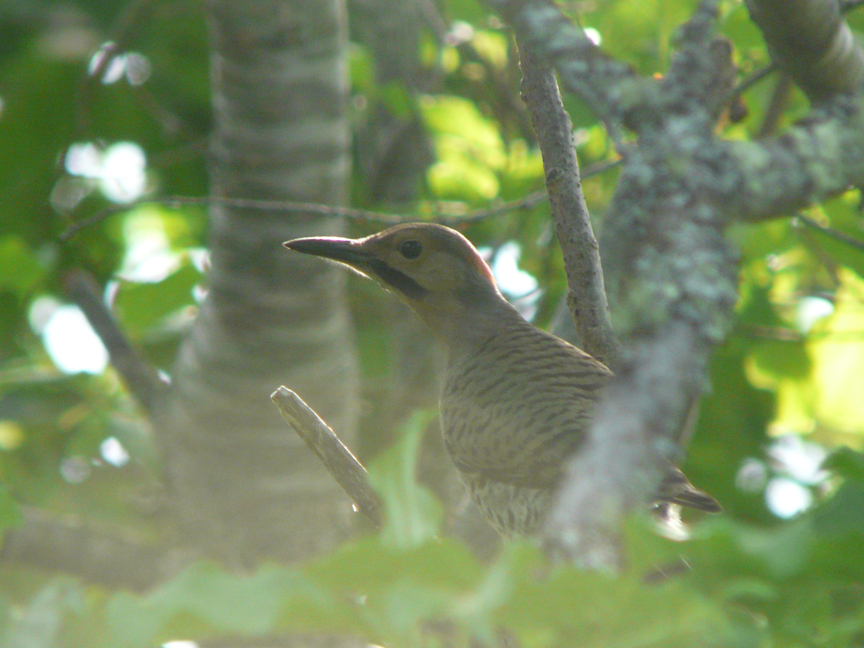
Northern flicker.
What a warm, sunny, pleasant Fourth of July. Jack and I hit the trail about 7:15 a.m., and right away I managed to count some fairly unusual bird species. Not that a black-throated green warbler is unusual at this latitude in this ecosystem at this time of year—just that I typically do not hear the bird singing off in the woods first thing. Red-eyed warblers, of course. Veeries everywhere. The usual birds coming up the wooded trail (although no rose-breasted grosbeak today).
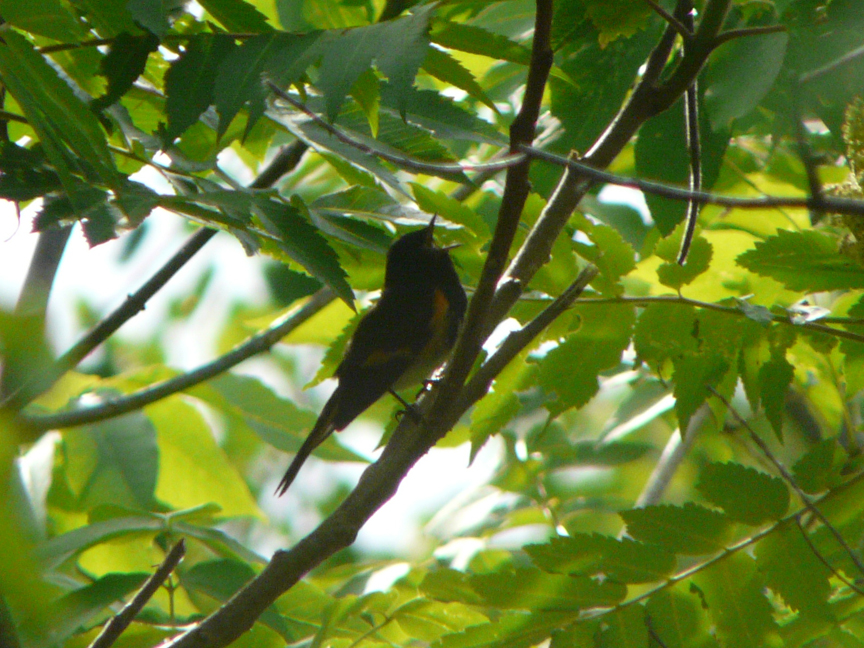
American redstart.
Horse flies were out. Many of them. Lots of flying insects. But that’s OK—they’ll never stop us from our morning hike, and they’ll also likely supply a few birds with breakfast.
Only fourteen species by the time we reached the summit (including a nice flicker sighting), but then a flurry: chipping sparrow in the spruces up top; yellow-rumped warbler there, too (first in many weeks); mourning doves and wood thrush voices and a black-billed cuckoo even. A herring gull at a distance.
Although Independence Day began overcast, the clouds moved away early, and the sun came out, and the temperature rose. A gorgeous day.
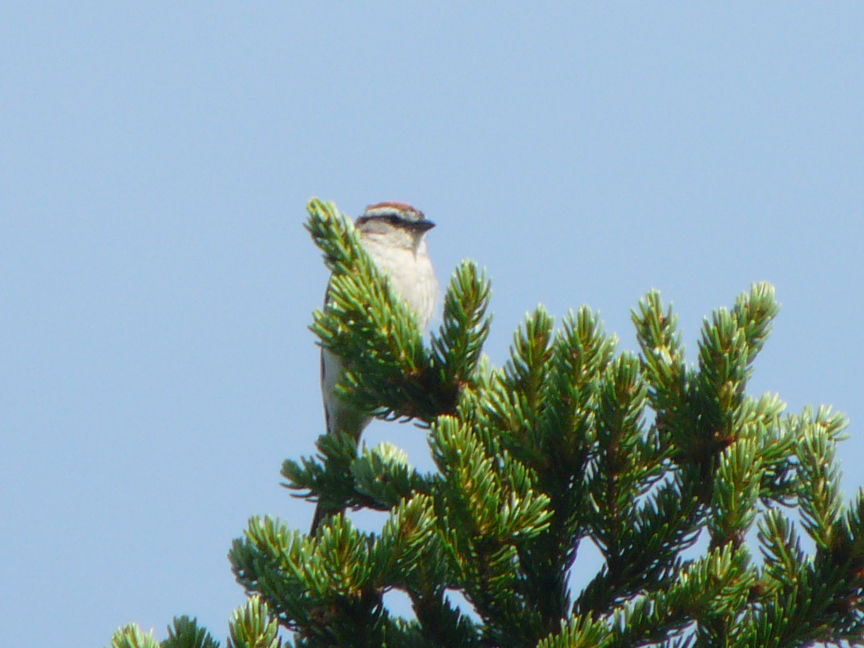
Chipping sparrow.
Coming back up the hill, I heard and/or saw: more cuckoos, white-throated sparrow, wood thrush, cardinal, hermit thrush, and (finally!) an ovenbird. (Odd that I heard no ovenbirds coming up the wooded trail.) Spotted a cardinal, two chipping sparrows—all five sparrows, in fact, and all four thrushes. In fact, coming back down the wooded trail, I stood for a moment and listened to four hermit thrushes singing all at once, some nearer, some farther. Their miraculous chorus made the woodland feel like a fairytale forest.
The only new species I identified on the whole return trip was a tufted titmouse—actually a titmouse family—just as we approachee the parking lot. But all in all, a fruitful, enjoyable Fourth of July hike today.
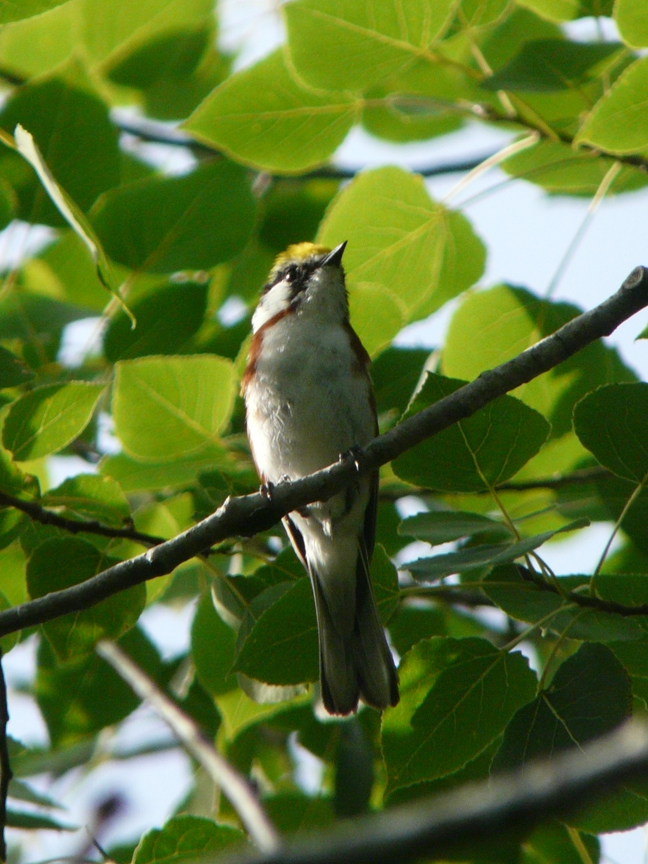
Chestnut-sided warbler.
Beech Hill List
Beginning at 7:15 a.m., I walked all trails.
1. Red-eyed vireo
2. Black-throated green warbler
3. Chestnut-sided warbler
4. Gray catbird
5. Veery
6. Chestnut-sided warbler
7. Black-capped chickadee
8. American redstart
9. Northern flicker
10. Eastern towhee
11. Blue jay
12. American crow
13. common yellowthroat
14. Yellow warbler
15. American goldfinch
16. Cedar waxwing
17. American robin
18. Field sparrow
19. Chipping sparrow
20. Mourning dove
21. Song sparrow
22. Yellow-rumped warbler
23. Herring gull
24. Savannah sparrow
25. Black-billed cuckoo
26. White-throated sparrow
27. Wood thrush
28. Northern cardinal
29. Hermit thrush
30. Ovenbird
31. White-breasted nuthatch
32. Black-and-white warbler
33. Tufted titmouse
Elsewhere
34. House sparrow
35. Rock pigeon
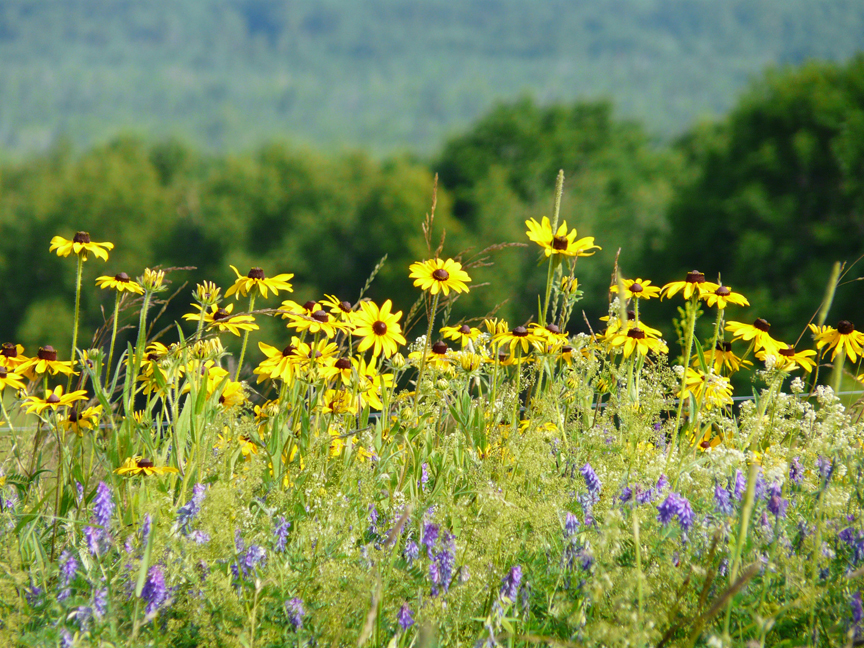
Wildflowers.
Tags: American crow, American goldfinch, American redstart, American robin, black-and-white warbler, black-billed cuckoo, black-capped chickadee, black-throated green warbler, blue jay, Cedar waxwing, chestnut-sided warbler, chipping sparrow, common yellowthroat, eastern towhee, field sparrow, gray catbird, hermit thrush, herring gull, house sparrow, mourning dove, northern cardinal, northern flicker, ovenbird, red-eyed vireo, rock pigeon, savannah sparrow, song sparrow, tufted titmouse, veery, white-breasted nuthatch, white-throated sparrow, wood thrush, yellow warbler, yellow-rumped warbler

