


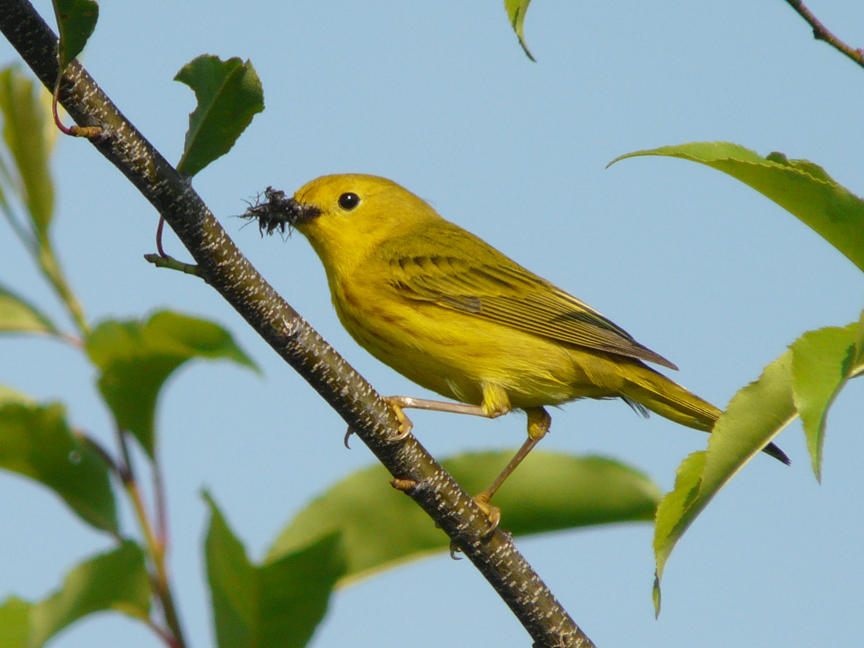
Yellow warbler.
It’s not that hard to take decent photos of Beech Hill birds at this time of year: all you have to do is find a really nesty place along the trail and then just stop. Before you know it, little passerines will be accosting you from all sides, chipping and flitting and eyeing you suspiciously. And chances are their beaks will be full of insects and arthropods and caterpillars—I mean crammed right full. Because they were returning to their nests with food for their young, but they don’t want you following along.
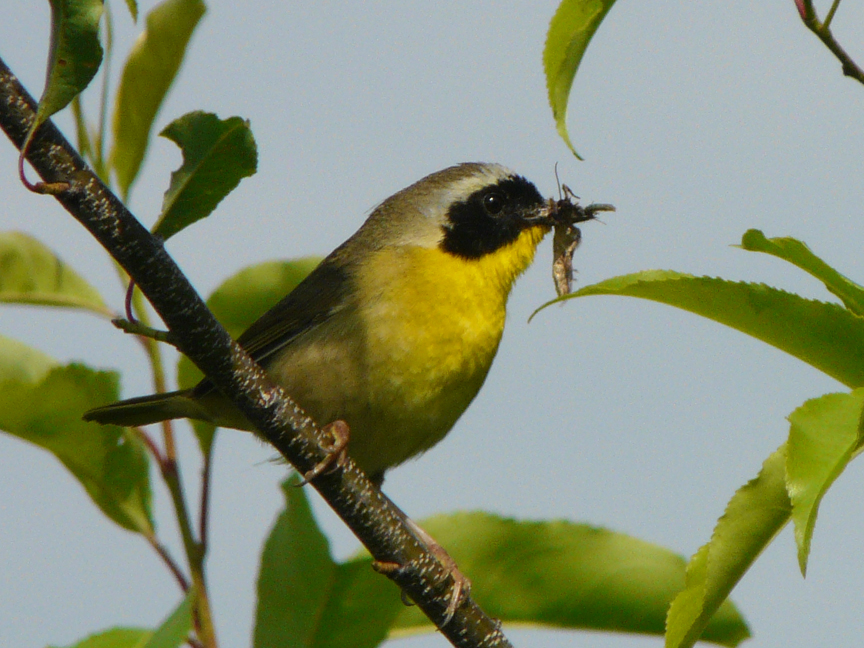
Common yellowthroat (male).
There’s one such place I’ve stopped these past two-three days on the hill where the trail cuts through low growth—thick brush on one side and small trees on the other—and yet is very near a wide field. Edges like this are irresistible to many species: on the one hand, happy hunting and a long line-of-sight; on the other, plenty of shadowy hiding places. At this particular edge, within about fifteen seconds after dog and I have stopped, the yellowthroats will start with their husky chip! chip! Soon after, yellow warblers begin chipping their somewhat sweeter notes. Then a towhee will fly up into the branches of a nearby birch. And waxwings will appear out of nowhere. And an alder flycatcher—they’re normally quite shy—will eventually flit into view. Finally, a goldfinch or two will show up. It’s a dependable spot. Today it got me a bunch of decent photos.
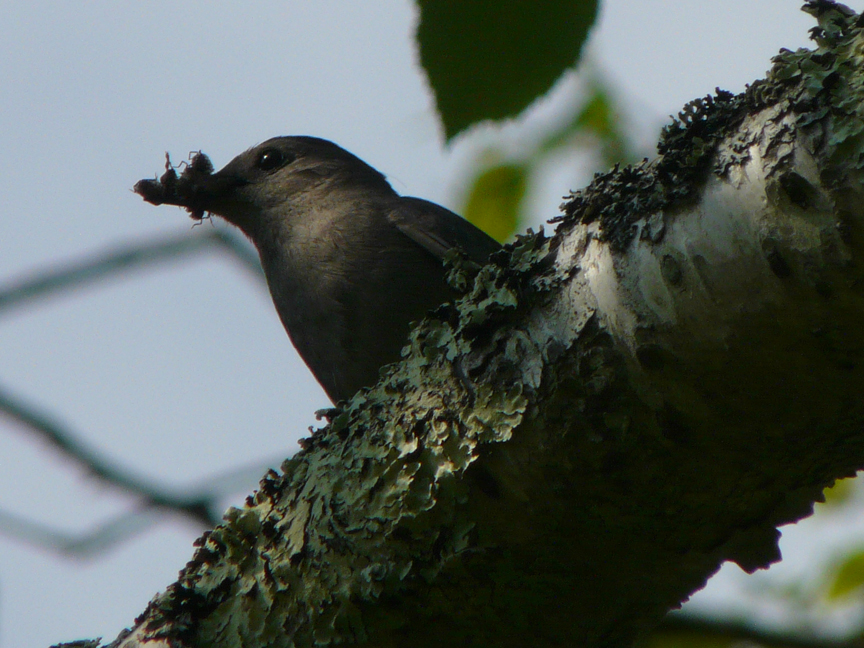
Gray catbird.
Otherwise, our morning hike was also much nicer than yesterday’s, Jack’s and mine. Still buggy, but not too bad. Still muggy, but not as muggy as yesterday. The two other humans we passed were walking and had no leashless dogs. Plus, we saw turkeys. Yep, right at the summit, grazing near Beech Nut.
And many other species. Thirty-nine in all—a nice, high number. True, a couple of these were overflying gull and cormorant. But also all five sparrows. Four of five resident flycatchers. Both Nashville warbler and redstart. And cuckoos were calling for the second straight day.
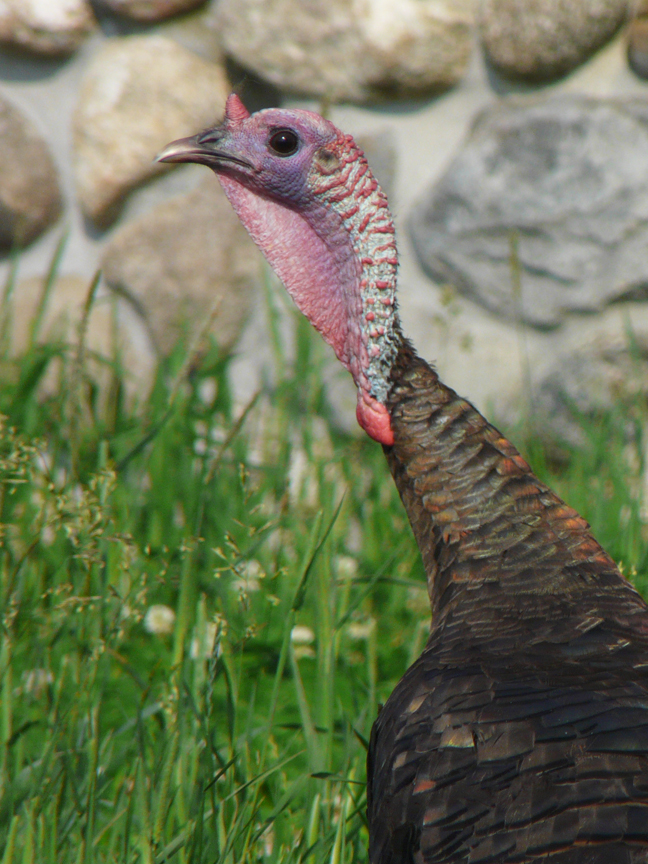
Wild turkey at the summit of Beech Hill.
Returning, I couldn’t help but remember one notable missing species in my high, near-solstice count today: ruby-throated hummingbird. I don’t pretend to know why I haven’t seen nearly as many as I did last year. But the odd dearth of hummingbirds got me thinking of how bird populations are—figuratively and accurately—the canaries in our planetary coal mine. What if some subtle shift in temperature or rainfall, or some outlandish human-caused oil spill, say, created a migratory catastrophe, and our resident bird populations began to fail? I thought of Silent Spring and Rachel Carson and how such a catastrophic occurrence wouldn’t simply mean a lack of birdsong. No, there’d be repercussions beyond the silence. Burgeoning insect populations. Crop failures. Famine and epidemic. It wouldn’t take much to tip the balance to points irremediable. Yet most of us humans remain so glib and short-sighted. It’s hard, it seems, to be heroes beyond our lifetimes.
But oh, well. Today was a good day. Lots of birds. Also bullfrogs in the vernal pool, turkeys along the wooded trail, chipmunks in the understory. And the thin squee of a broad-winged hawk above the woodland trail. And a vociferous pileated woodpecker after we got home.
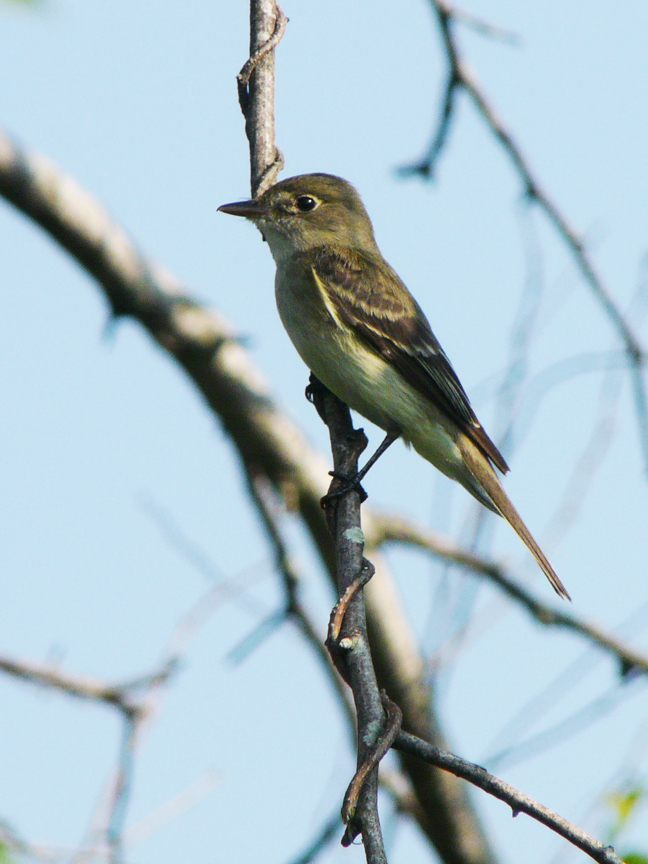
Alder flycatcher.
Beech Hill List
Beginning at 7:30 a.m., I walked all trails.
1. American robin
2. Eastern phoebe
3. Black-throated green warbler (voice)
4. Chestnut-sided warbler
5. Red-eyed vireo
6. Common yellowthroat
7. Black-capped chickadee (voice)
8. Rose-breasted grosbeak (voice)
9. Veery (voice)
10. Gray catbird
11. American redstart (voice)
12. Eastern towhee
13. Cedar waxwing
14. Alder flycatcher
15. Yellow warbler
16. American goldfinch
17. Field sparrow (voice)
18. Tree swallow
19. Nashville warbler (voice)
20. Song sparrow
21. Black-and-white warbler (voice)
22. Ovenbird (voice)
23. American crow (voice)
24. Mourning dove
25. Tufted titmouse (voice)
26. Wild turkey
27. Savannah sparrow
28. Hermit thrush (voice)
29. White-throated sparrow (voice)
30. Black-billed cuckoo (voice)
31. Chipping sparrow
32. Great crested flycatcher (voice)
33. Blue jay (voice)
34. White-breasted nuthatch
35. Herring gull
36. Double-crested cormorant
37. Eastern wood-pewee (voice)
38. Hairy woodpecker (voice)
39. Broad-winged hawk
Elsewhere
40. House finch (voice)
41. House sparrow (voice)
42. Pileated woodpecker (voice)
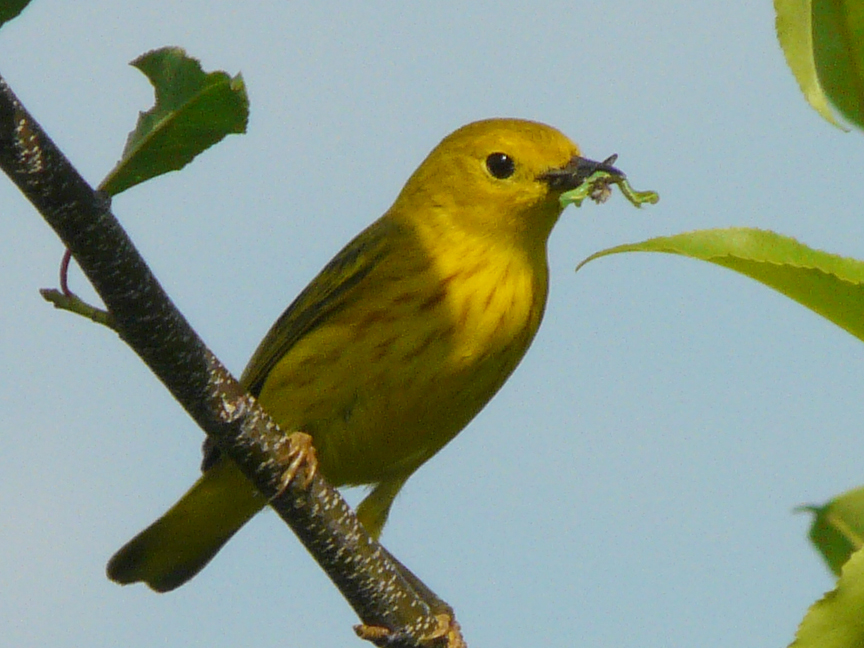
Yellow warbler.
Tags: alder flycatcher, American crow, American goldfinch, American redstart, American robin, black-and-white warbler, black-billed cuckoo, black-capped chickadee, black-throated green warbler, blue jay, broad-winged hawk, Cedar waxwing, chestnut-sided warbler, chipping sparrow, common yellowthroat, double-crested cormorant, eastern phoebe, eastern towhee, eastern wood-pewee, field sparrow, gray catbird, great crested flycatcher, hairy woodpecker, hermit thrush, herring gull, house finch, house sparrow, mourning dove, Nashville warbler, ovenbird, pileated woodpecker, red-eyed vireo, rose-breasted grosbeak, savannah sparrow, song sparrow, tree swallow, tufted titmouse, veery, white-breasted nuthatch, white-throated sparrow, wild turkey, yellow warbler

