


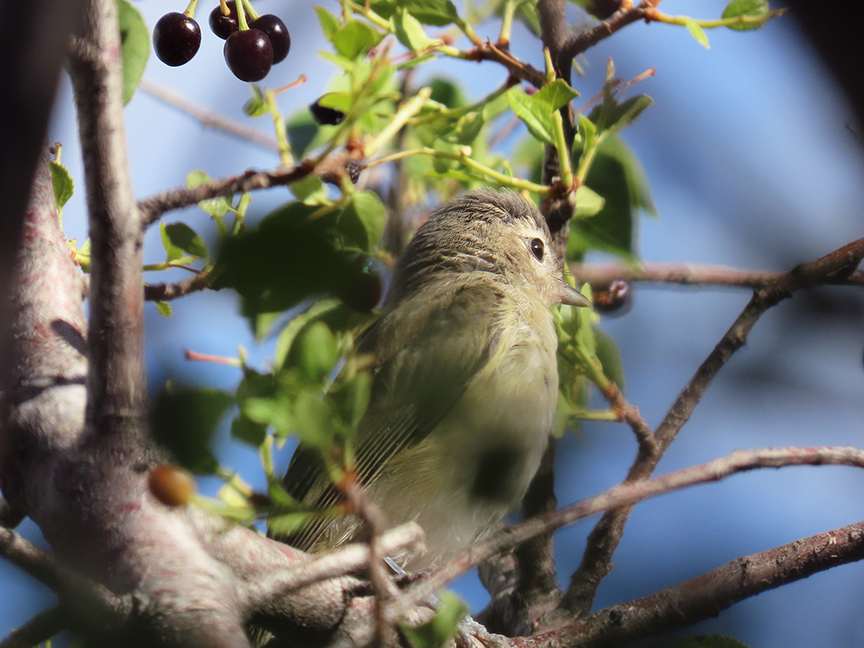
This morning’s walk with dog up our usual trail began eerily quiet. For several minutes, I neither saw nor heard a single bird. Then, for the next few, I heard one, two, three birds. Individual birds, that is (although they happened to be of three different species).
We got to the trailhead a bit later than yesterday, so this seemed odd. At first. Until I began to consider the warmth, dryness, photoperiod, and all the other subtle (to humans) factors that must go into a bird’s daily activities.
With a few minutes more, the numbers had increased to about normal for the season. And by hike’s end, I had a nice list, with a few notable sightings.
As, while birding, I often say out loud: “You never know.”
Grandeur Peak Area List
Beginning at 8:15 a.m., I hiked a few hundred feet up a mountain.
1. Red-tailed Hawk (v)
2. Rock Pigeon*
3. Black-chinned Hummingbird
4. Woodhouse’s Scrub-jay
5. Mourning Dove*
6. Lazuli Bunting
7. American Robin*
8. House Finch**
9. Lesser Goldfinch**
10. Blue-gray Gnatcatcher
11. Spotted Towhee
12. Black-capped Chickadee
13. Black-headed Grosbeak (v)
14. Virginia’s Warbler
15. Warbling Vireo
16. Pine Siskin
17. Chipping Sparrow
18. California Quail* (v)
19. Western Tanager
Elsewhere
20. Eurasian Collared Dove (v)
21. Black-billed Magpie
Mammals
Red Squirrel (v)
(v) Voice only
*Also elsewhere
**Voice only elsewhere
Tags: American robin, black-billed magpie, black-capped chickadee, black-chinned hummingbird, black-headed grosbeak, blue-gray gnatcatcher, chipping sparrow, Eurasian collared dove, house finch, lazuli bunting, lesser goldfinch, mourning dove, pine siskin, red squirrel, red-tailed hawk, rock pigeon, spotted towhee, Virginia’s warbler, warbling vireo, Woodhouse’s scrub jay

