


Lazuli Buntings are small, vocal, attractive, birds—and the most common species in my patch. You’d think I’d begin to take them for granted. But no.
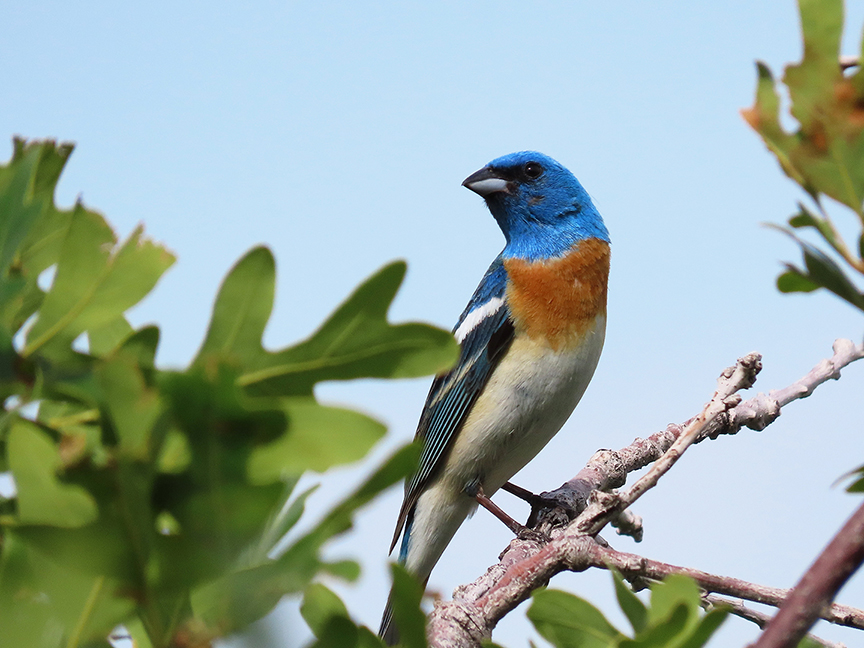
During this morning’s long, high hike with Captain Jack, we encountered a bunch of lazulis. Singing males (as usual), and furtive females. Upon topping the switchback that leads to the terminus of the Pipeline Trail we accidentally snuck up on a pair at the overlook. The female was hopping about in the rocks, plucking up dog hairs—lots and lots of dogs accompany their humans up there—shooing away the randy male who flitted nearby.
I counted twenty-three buntings on today’s two-and-a-half hour, three-and-a-third mile excursion. I’m sure I missed a few.
Grandeur Peak Area List
Beginning at 8 a.m., I hiked about 1,200 feet up a mountain.
1. House Finch**
2. Rock Pigeon*
3. Lazuli Bunting
4. American Robin*
5. Black-headed Grosbeak (v)
6. Black-chinned Hummingbird*
7. Blue-gray Gnatcatcher
8. Spotted Towhee
9. Woodhouse’s Scrub-jay
10. Black-billed Magpie** (v)
11. Black-capped Chickadee
12. Orange-crowned Warbler
13. Chukar (v)
14. Western Tanager (v)
15. Black-throated Gray Warbler (v)
16. Warbling Vireo (v)
Elsewhere
17. Eurasian Collared Dove (v)
18. California Quail
Mammals
Rock Squirrel
(v) Voice only
*Also elsewhere
**Voice only elsewhere
Tags: American robin, black-billed magpie, black-capped chickadee, black-chinned hummingbird, black-headed grosbeak, black-throated gray warbler, blue-gray gnatcatcher, California quail, chukar, Eurasian collared dove, house finch, lazuli bunting, Orange-crowned Warbler, rock pigeon, rock squirrel, spotted towhee, warbling vireo, western tanager, Woodhouse’s scrub jay

