


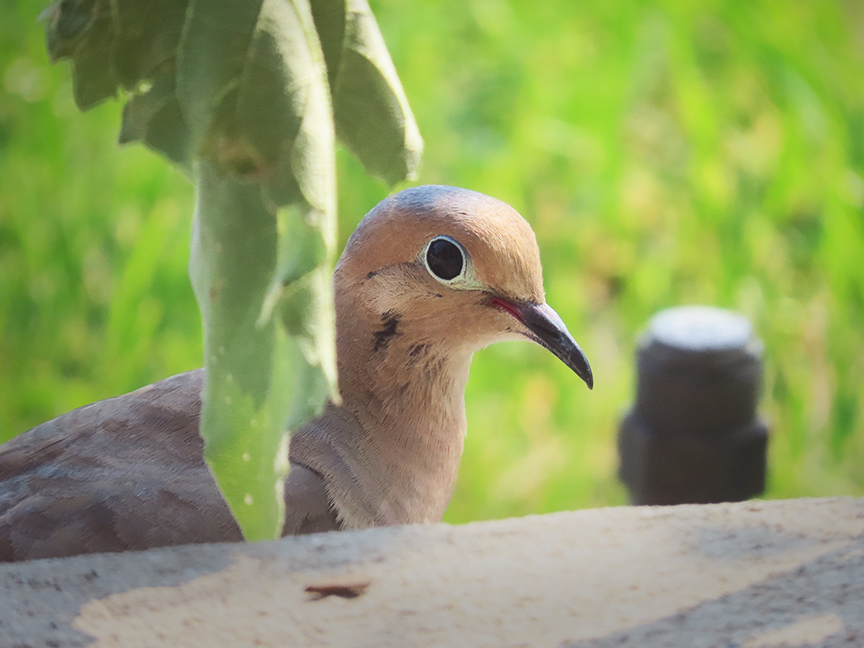
It occurs to me that I haven’t devoted fair attention here to the Mourning Dove. It’s a lovely bird, an abundant species—one that can be seen throughout the Lower 48—and thus easily taken for granted. Still, it almost invariably improves the places it frequents.
A Mourning Dove’s soft cooing resembles human mourning enough to have spawned its common English name, but to me it’s a serene sound, a soft sound, a sound of peaceful mornings and evenings. The species is not hard to see as it perches quietly on a utility line in town or a high perch in the country. It interrupts no conversation, means no harm.
I see doves often while hiking with Captain Jack—whole families of them lately (eleven birds today). Most we’ve flushed from green leafy places that stay cool in the mountain shade. When one bursts into flight, its whistling wings are enough to ID a Mourning Dove. Its flight is fast and sure.
Doves are of course popular game birds—in fact, the U.S. Fish and Wildlife Service reports more Mourning Doves “harvested” than all other species combined (in 2003, anyway)—and yet their populations seem stable.
But I could never kill one, that’s for sure.
Grandeur Peak Area List
Beginning at 8:01 a.m., I hiked a few hundred feet up a mountain.
1. Mourning Dove*
2. Black-chinned Hummingbird
3. Blue-gray Gnatcatcher
4. American Robin
5. House Sparrow (v)
6. Spotted Towhee
7. Black-capped Chickadee**
8. House Finch*
9. Broad-tailed Hummingbird
10. Woodhouse’s Scrub-jay
11. Red-breasted Nuthatch (v)
12. Lazuli Bunting (v)
13. Black-headed Grosbeak
Elsewhere
14. Black-billed Magpie
15. Eurasian Collared Dove
16. Lesser Goldfinch
17. Rock Pigeon
Mammals
Rock Squirrel
(v) Voice only
*Also elsewhere
**Voice only elsewhere
Tags: American robin, black-billed magpie, black-capped chickadee, black-chinned hummingbird, black-headed grosbeak, blue-gray gnatcatcher, broad-tailed hummingbird, Eurasian collared dove, house finch, house sparrow, lazuli bunting, lesser goldfinch, mourning dove, red-breasted nuthatch, rock pigeon, rock squirrel, spotted towhee, Woodhouse’s scrub jay

