


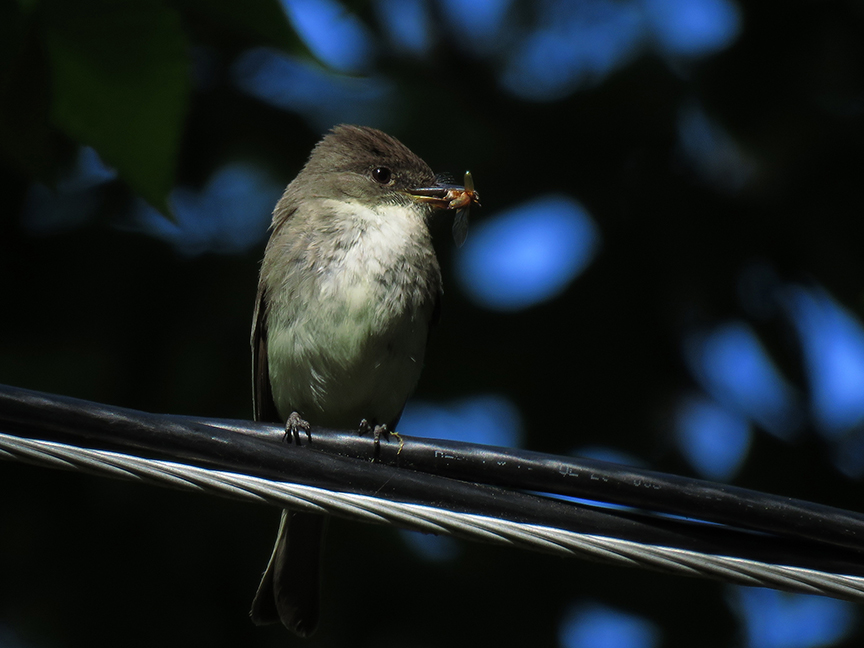
Eastern Phoebe
Nestling phoebes are appearing in at least four nests that I know of, and the parents are busily sharing feeding duties. They’re so efficient and sneaky for having such conspicuous nests—well, relatively conspicuous (although most humans don’t pay close enough attention to their natural environments to even know they’re there).
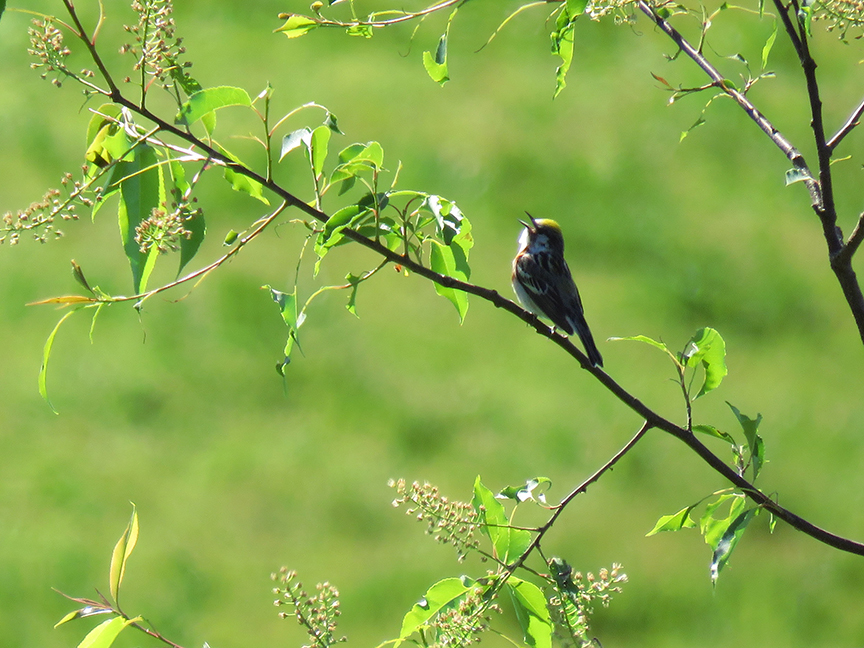
Chestnut-sided Warbler.
Other birds have nestlings—or fledglings—already, too, and more will appear in the nest weeks. I thought today about the great increase in bird life in the Northern Hemisphere in the few short months of spring and summer—so many more birds will migrate south in fall.
On a grand scale, it’s a miracle. For the adult birds involved, it’s a lot of busy work.
Beech Hill List
Beginning at 8:15 a.m., I hiked the open trail.
1. American Goldfinch**
2. Red-eyed Vireo (v)
3. Ovenbird (v)
4. American Redstart**
5. American Robin* (v)
6. White-breasted Nuthatch (v)
7. Black-capped Chickadee (v)
8. Eastern Towhee
9. Mourning Dove*
10. Blue Jay (v)
11. Northern Cardinal
12. Alder Flycatcher (v)
13. Chestnut-sided Warbler**
14. Gray Catbird
15. Cedar Waxwing
16. Song Sparrow**
17. Yellow Warbler**
18. Common Yellowthroat (v)
19. American Crow*
20. Field Sparrow
21. Black-throated Green Warbler (v)
22. Prairie Warbler (v)
23. Eastern Phoebe*
24. Chipping Sparrow* (v)
25. Broad-winged Hawk
26. Tufted Titmouse (v)
27. American Redstart** (v)
28. Veery (v)
Elsewhere
29. Herring Gull
30. Double-crested Cormorant
v = Voice only
*Also elsewhere
**Voice only elsewhere
Tags: alder flycatcher, American crow, American goldfinch, American redstart, American robin, black-capped chickadee, black-throated green warbler, blue jay, broad-winged hawk, Cedar waxwing, chestnut-sided warbler, chipping sparrow, common yellowthroat, double-crested cormorant, eastern phoebe, eastern towhee, field sparrow, gray catbird, herring gull, mourning dove, northern cardinal, ovenbird, prairie warbler, red-eyed vireo, song sparrow, tufted titmouse, veery, white-breasted nuthatch, yellow warbler

