


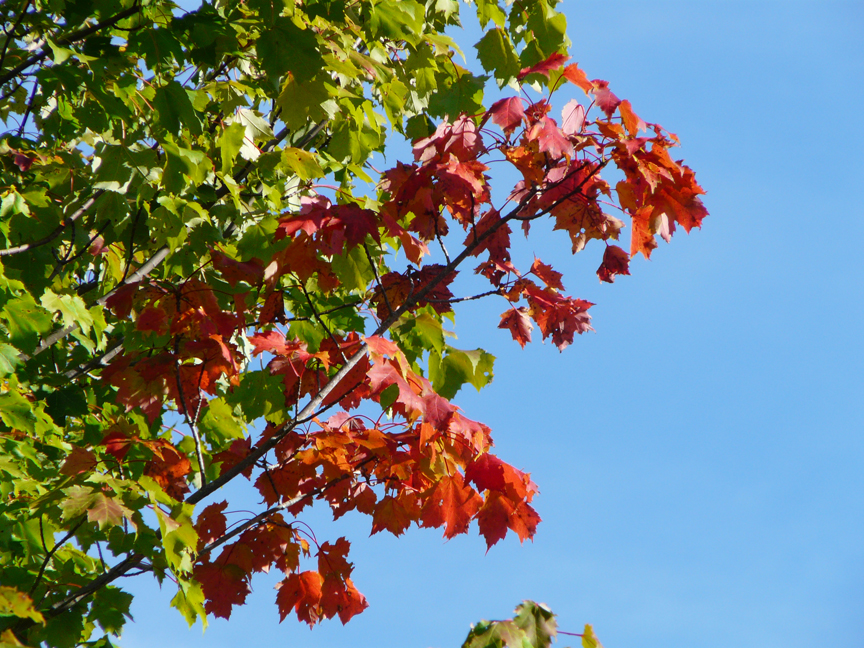
Turning leaves.
Ah, fall. Havest time. That point in the year when the air grows nippy, you can catch the smell of woodsmoke, and daylight becomes dear. The season of confusing warblers.
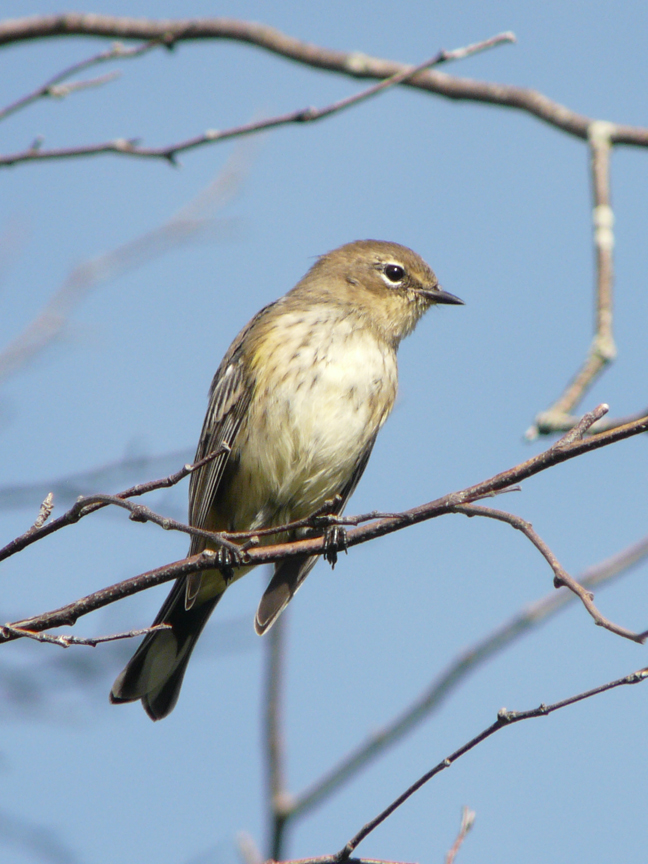
Yellow-rumped warbler.
Nothing was confusing about the mew! of a catbird as Jack and I embarked on our morning hike. The sky was mostly overcast, the temperature was pleasantly cool, and color had begun to infuse the plant life right on schedule. It struck me as somewhat eerie, even: the first day of fall, the first ruddy hues down the southern slope, the first bright red sumac leaves, the first fiery maple clusters. On the trail beneath the poplar groves spread newly fallen yellow aspen leaves. And other dead things.
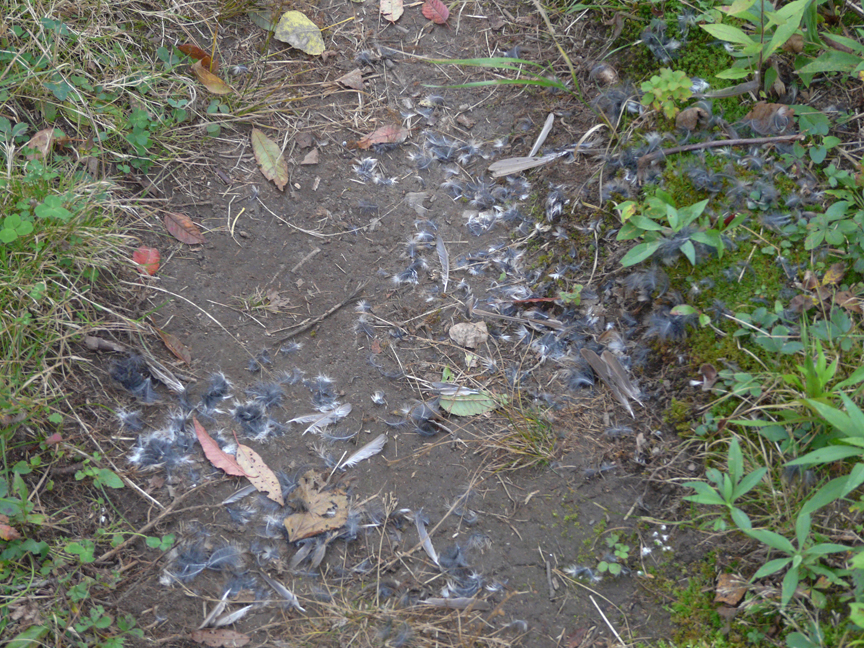
First I saw a small dead meadow vole—or what looked like a vole—on the upper wooded trail. Then, along a curve, another collection of feathers and down, all that remained of some hawk’s dinner. Finally, coming down the open trail, another small dead vole. I also saw a harrier being accosted by crows and a kestrel hovering above a brushy field. And warblers moving through.
Mostly ‘rumps again—many of them. (Yellow-rumped warblers and white-throated sparrows seem by far the most abundant birds on the hill right now.) Most field guides will tell you that warblers don’t migrate in flocks, but yell0w-rumps do stick together, in my observation. They come in loose groups and chip and chase and flit together from tree to tree. I hardly ever see a single one. Usually I see four or five or six. Today I heard and/or saw yellow-rumped warblers all over the hill. Only later, looking at photos, did I notice that among them was a vireo—a young blue-headed, I’m pretty sure.
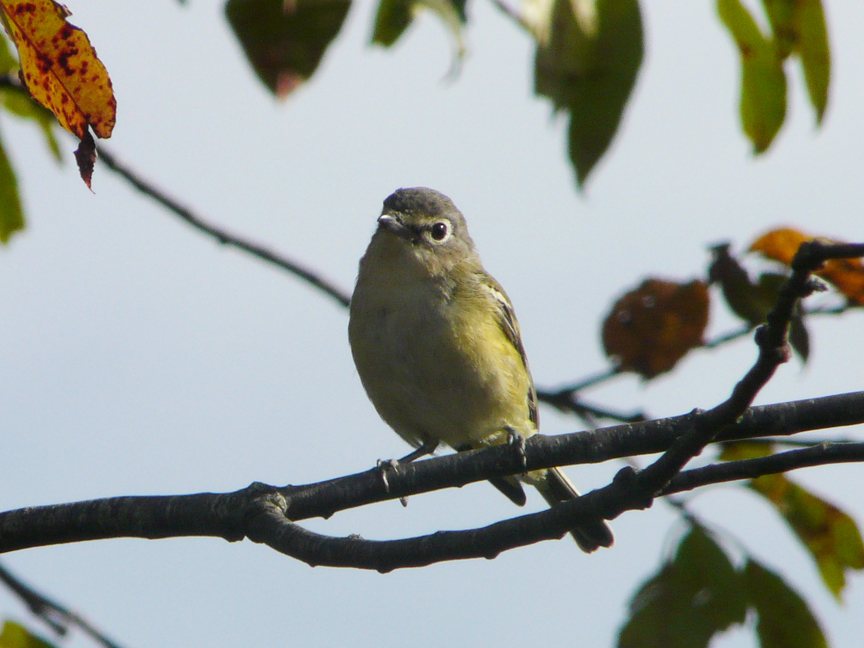
Blue-headed vireo (I'm pretty sure).
Also sparrows, three varieties. A phoebe. And returning down to the wooded section, coming around between meadows, I heard among the ‘rumps a chittering chatter—a house wren. We stopped, and I as waited for the little bird to make an appearance (which it did but briefly) a brown thrasher stuck its head out from a clump of dark undergrowth. Then it ducked away again. That was a surprise—alas, to sudden for a photo.
A group of chickadees appeared, so I scanned the canopy on either side of the lower wooded trail. There, a red-eyed vireo. And nearing the parking lot, I heard the high, thin notes of brown creepers among the trees.
End of the trail.
Beech Hill List
Beginning at 7:30, I hiked all trails.
1. Gray catbird
2. Common yellowthroat (voice)
3. White-throated sparrow
4. Eastern towhee
5. Yellow-rumped warbler
6. Blue jay
7. Northern flicker
8. American crow
9. Black-capped chickadee
10. American goldfinch (voice)
11. Song sparrow
12. Blue-headed vireo
13. Northern harrier
14. Savannah sparrow
15. Kestrel
16. Eastern phoebe
17. House wren
18. Brown thrasher
19. Red-eyed vireo
20. Brown creeper (voice)
Elsewhere
21. Herring gull
22. European starling
23. Rock pigeon
24. Mourning dove
25. Northern cardinal
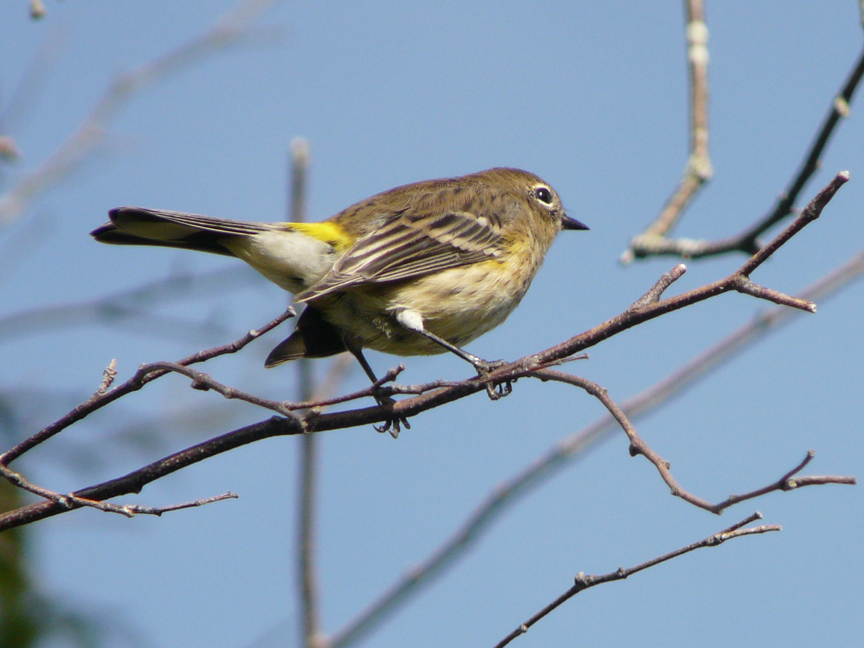
Yellow-rumped warbler, Beech Hill, Rockport, Maine, 23 September 2010.
Tags: American crow, American goldfinch, black-capped chickadee, blue jay, blue-headed vireo, brown creeper, brown thrasher, common yellowthroat, eastern phoebe, eastern towhee, European starling, gray catbird, herring gull, house wren, mourning dove, northern cardinal, northern flicker, northern harrier, red-eyed vireo, rock pigeon, savannah sparrow, song sparrow, white-throated sparrow, yellow-rumped warbler

