


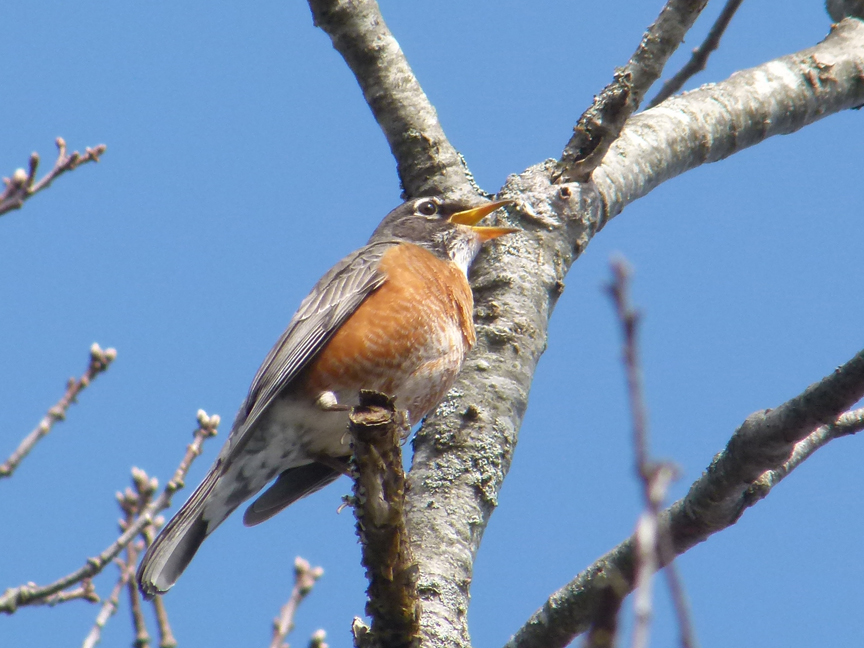
American robin.
“Marco.” “Polo.”
Birds have a sort of variation of the swimming pool game—only above the ground. You can hear them nearly any day in the woods. Today, for instance, on the Beech Hill trail. First I heard phoebes playing. A nesting pair. They were fluttering after flies to and from perches maybe fifty feet apart. You could hear a quiet “brrup” or “peep” as they kept instinctive track of each other by sound. Not long after, chickadees were doing it—chickadees are masters of the game—using a variety of short whistles, intermingled with occasional chattering notes. Just letting each other know they were still around.
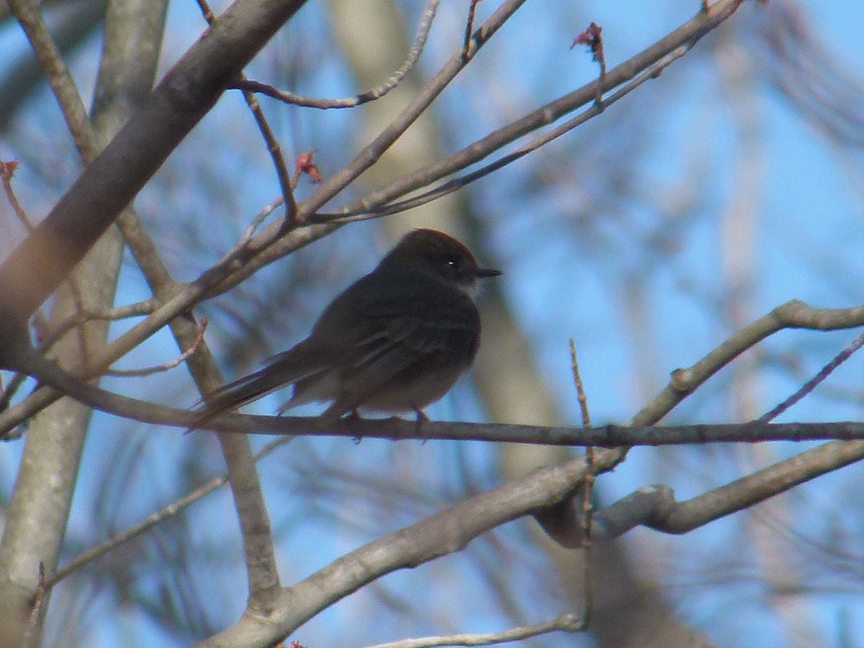
Eastern phoebe.
I’m convinced, in fact, that other species hang out with chickadees because of their expertise. Where there are chickadees, and you can often find nuthatches or titmice or brown creepers nearby, all of them kind of moving through the trees together. I heard white-breasted nuthatches uttering their especially soft beep! notes down the lower trail today. They appeared to be tracking robins.
Robins aren’t shy about playing. Their voices are kind of loud—but still they utter only a clipped tut-tut! and not a full song. (Occasionally, if they’re alarmed, a sort of sharp squeal.) Along with the nuthatches and robins, I happened also to notice a flicker today. It was silent. I’m not sure how great flickers are at Marco Polo, since they only have one volume that I know of, and it’s LOUD.
Brown creepers do it. Woodpeckers. Sparrows. In late spring and summer, you can’t go anywhere without hearing warblers go at it—but their version involves subtle chip-notes, each with it’s very slight peculiarity. Hardly any non-birders notice these chips, I bet. I like to try to tell them apart. I can pick out maybe a half dozen or so.
Larger birds don’t know the game, or don’t bother with it. Crows simply talk to each other over great distances, using crow language. They communicate via pitch and timbre and number of caws.
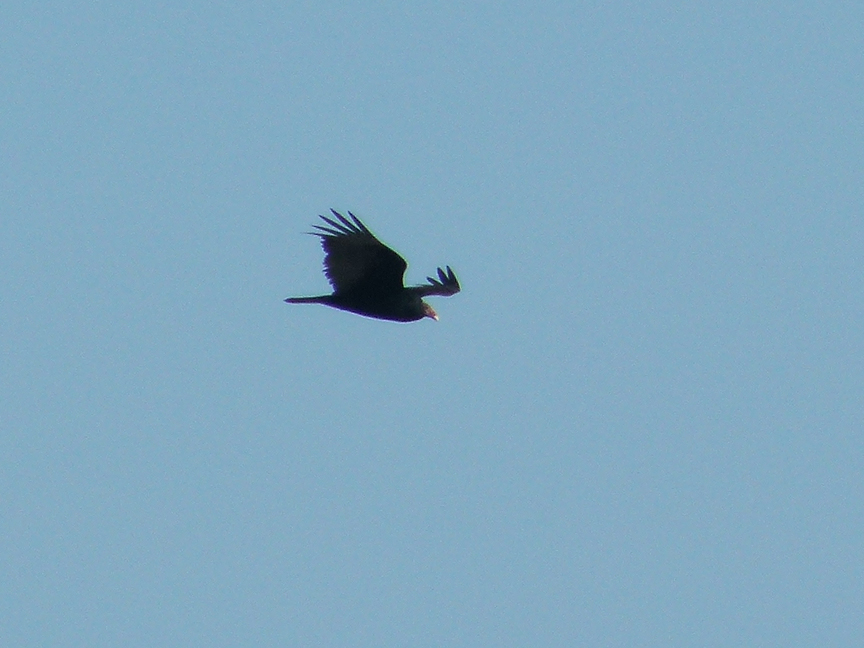
Turkey vulture.
This evening, while watching the sun set behind the hill out back, I saw what at first I thought was a crow flying swiftly from left to right beyond the oak branches. (Crows bed down in the pines up there at that time of day.) But I soon recognized from its method of flight—a burst of quick wingbeats, then a brief glide—that it was a pileated woodpecker. This woodpecker was going places, though. No keeping-track required.
Tonight the spring peepers are singing. I suppose you might think of theirs as a more traditional brand of Marco Polo.
Beech Hill List
Beginning at 4:45 p.m., I hiked the wooded trails.
1. Herring gull
2. Eastern phoebe
3. American goldfinch (voice)
4. Black-capped chickadee
5. American crow (voice)
6. Turkey vulture
7. American robin
8. White-breasted nuthatch
9. Northern flicker
Elsewhere
10. Northern cardinal
11. Tufted titmouse
12. Song sparrow
13. House finch
14. House sparrow
15. European starling
16. Rock pigeon
17. Ring-billed gull
18. Double-crested cormorant
19. Pileated woodpecker
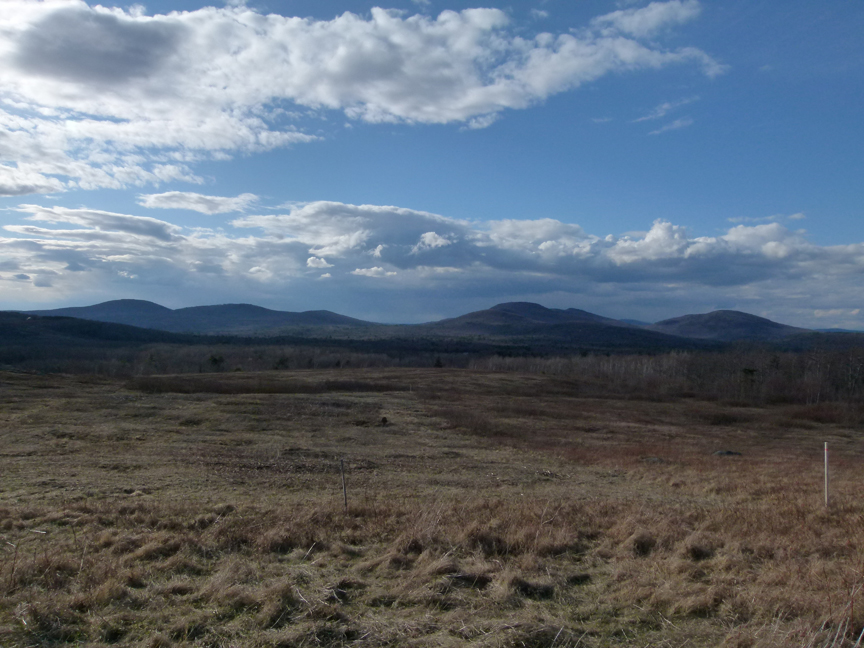
Coastal hills.
Tags: American crow, American goldfinch, American robin, black-capped chickadee, double-crested cormorant, eastern phoebe, European starling, herring gull, house finch, house sparrow, northern cardinal, northern flicker, pileated woodpecker, ring-billed gull, rock pigeon, song sparrow, tufted titmouse, turkey vulture, white-breasted nuthatch

