


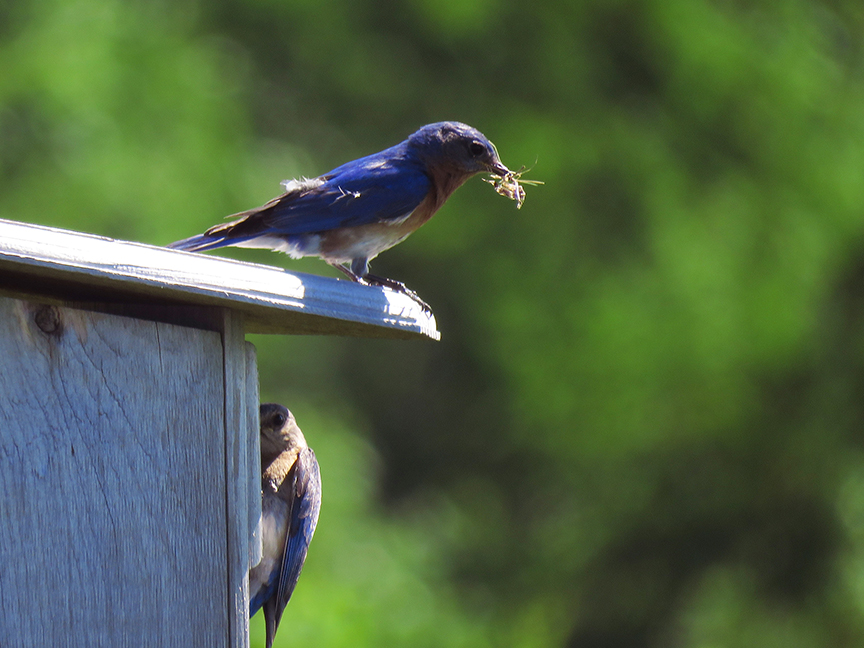
Bluebirds taking over an old Tree Swallow box.
Today at the summit of Beech Hill I came upon a pair of Eastern Bluebirds taking over a nest box used by Tree Swallows to fledge a brood already this year. Bluebirds are among a number of species that can nest twice in a season—phoebes, which nest in the nearby hut each year, are another—and if these are successful, they’ll be the first to do it in this particular box, the highest on the hill.
This small but hopeful undertaking by bluebirds speaks loudly to me of the importance of second chances.
Beech Hill List
Beginning at 9 a.m., I hiked the open trail.
1. Common Yellowthroat
2. Hermit Thrush (v)
3. American Robin* (v)
4. Chestnut-sided Warbler**
5. American Goldfinch (v)
6. Chipping Sparrow* (v)
7. Tufted Titmouse (v)
8. Song Sparrow
9. Eastern Towhee
10. American Crow*
11. Rose-breasted Grosbeak (v)
12. Blue Jay
13. Yellow Warbler
14. Eastern Bluebird
15. Field Sparrow (v)
16. Savannah Sparrow
17. Northern Cardinal (v)
18. Common Raven
19. Purple Finch (v)
20. Alder Flycatcher (v)
21. Gray Catbird**
22. Black-capped Chickadee (v)
23. Cedar Waxwing
24. Herring Gull*
Elsewhere
25. Osprey (v)
v = Voice only
*Also elsewhere
**Voice only elsewhere
Tags: alder flycatcher, American crow, American goldfinch, American robin, black-capped chickadee, blue jay, Cedar waxwing, chestnut-sided warbler, chipping sparrow, common raven, common yellowthroat, eastern bluebird, eastern towhee, field sparrow, gray catbird, hermit thrush, herring gull, northern cardinal, osprey, purple finch, rose-breasted grosbeak, savannah sparrow, song sparrow, tufted titmouse, yellow warbler

