


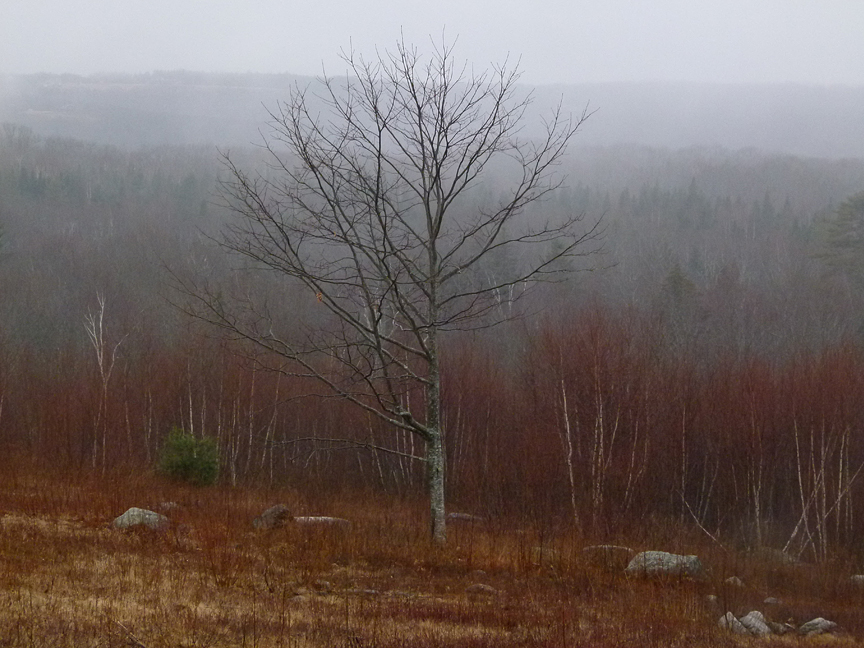
Young oak.
I have a confession: I’m held in awe by trees. I worship them. The wood is my church, a place where time slows, a place where a find myself deep in contemplation of incomprehensible things. Like time.
Trees are alive. They’re living things—until they die. Deadfall, stumps, and snags are mere husks that record the long years of slows lives of standing still. Lives that pulse with the seasons. Unthinking lives. I wonder about the mindlessness of the multitude of lush growing members of the plant kingdom. Especially trees.
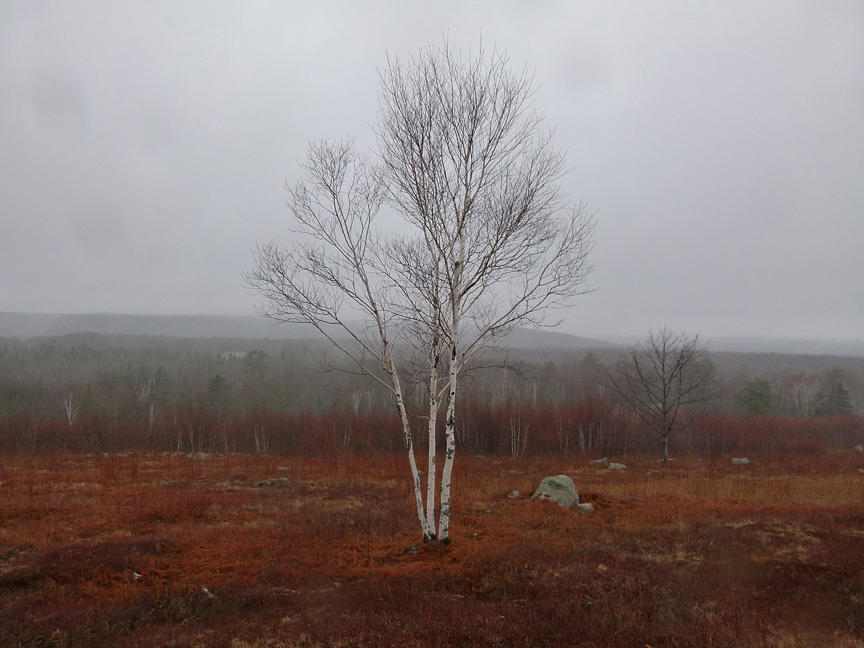
Birch.
Trees can grow for centuries and fall victim in an hour to human hands. Or lightning strikes, or storms. But a long, hard weekend blow must feel like a sneeze, to trees. A flood is their sip of water. They stand unaware of the nesting robins, the roosting crows, the squirrel in the knothole. They simply live, grow, stand still from moment to moment to moment. Except when they sway in the wind. And they stand silent—except when there’s a rustling of their leaves. They churn out acorns or maple keys, and their tiny offspring sprout in their shadows. Humanity exerts powerful mechanical forces to fell their mass and clear the land, but leave the land alone for a few years, and a young forest will begin again to grow.
Deserts don’t have them. Nor do oceans. But I happen to live among the great eastern forests—or, more accurately, on the edge of one—and have become familiar with many individual trees. I’ve become so familiar with a few that I can remember when they were noticeably smaller than they are now. Where has the time gone?
On Beech Hill, I’ve fallen in love with a particular young trailside birch. I’ve seen it full of greenery and bare as a skeleton. I’ve seen it adorned with bluebirds. I’ve seen it sway. And beyond it is a young oak, which I’ve also come to love. Several times I’ve seen a barred owl perched in this oak’s branches. One time I saw a marsh hawk perched there. Seeing as how humans have vowed to protect the hill for future generations (of humans), the young birch and oak will outlive me by centuries, I imagine—or at least the oak will, since birch trees don’t live so long. I sometimes picture in my mind what the little oak will look like many years from now, how the landscape will have changed.
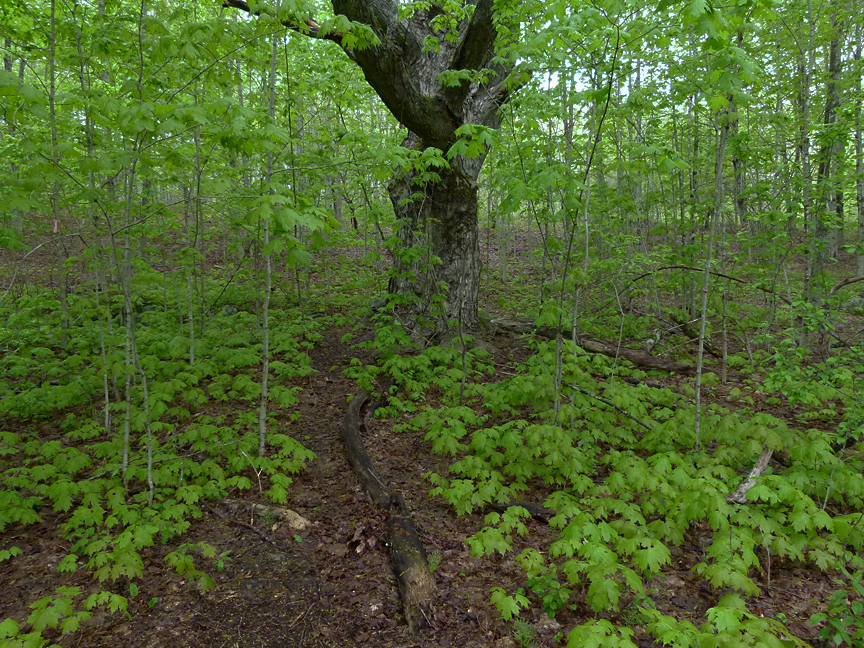
Grandmother maple, last spring.
Down at the wooded trailhead stands a gigantic sugar maple. Beneath it you can see generations of young maples in a circle around its trunk. I wonder what great tree the old grandmother maple came from, where it stood exactly.
Apparently, I wonder about a lot of things.
When I was a kid, we moved from Texas to North Carolina, and I had my first experience of walking through a wood alone. Something changed in me at that young age. It was a piney wood. I remember the sticky feel of pine sap on my hands and fingers after I’d climbed one of the straight trunks and perched there with a new perspective on my surroundings, a bird’s perspective. I also remember, on the little path I traveled, a single pine with a split trunk that made it look like two separate trees. But it wasn’t. I had a secret name for that tree: The Twin Angels.
I have a hunch that my love of birding—of chasing after colorful, short-lived winged creatures whose songs are measures of fleet time—has something to do with the paths they travel through the leafy backdrop of long-lived beings that cluster together in groves and thickets and stands, standing still.
Beech Hill List
Beginning at 5:15 p.m., I hiked the open trail.
1. Black-capped chickadee
2. American crow
Elsewhere
3. Downy woodpecker
4. House finch
5. Tufted titmouse
6. Herring gull
7. Rock pigeon
8. American robin
9. Mourning dove
10. American woodcock
Tags: American crow, American robin, American woodcock, black-capped chickadee, downy woodpecker, herring gull, house finch, mourning dove, rock pigeon, tufted titmouse

