


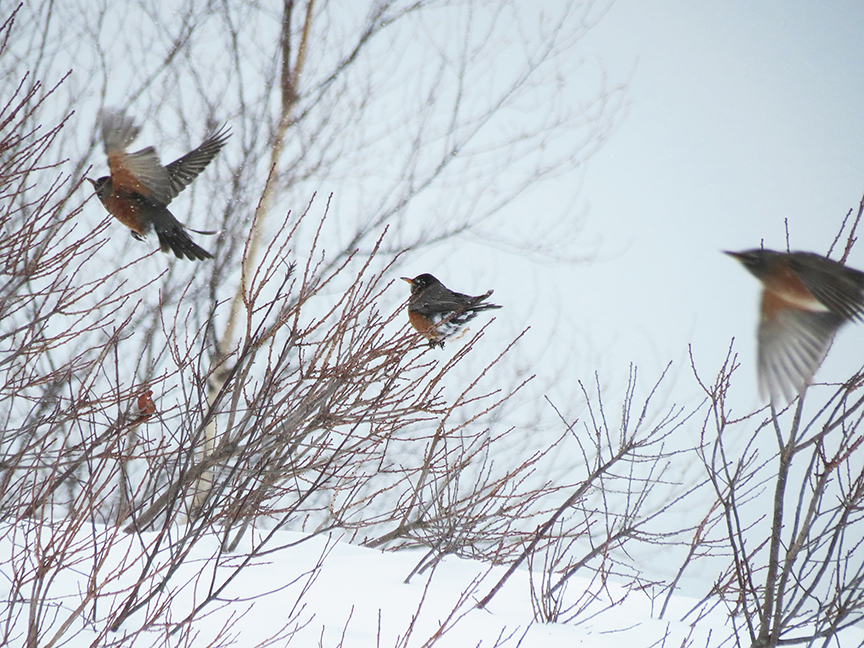
American Robin.
For millennia, humans have foretold the weather by paying attention to natural signs. Like the behavior of animals and birds. We had no TV, no cell phones, no video games and could spend a lot of times observing. This wasn’t reading tea leaves; this was early science.
The fact hit home today during my cold-weather hike at Beech Hill before the arrival of tonight’s blizzard. A flock of robins was flitting from sumac to sumac. A family o flickers did likewise. And three Yellow-rumped Warbers were poking in the snow, digging up shallow-covered bayberries. Watching this natural behavior made me realize these birds knew a big storm was coming.
The robins, the flickers, the warblers… each species was scarfing down and stocking up. They knew—though some inner barometer or shift in the temperature or subtle change in humidity, or all of these—that storm was coming.
Today, zipping about on highway loops around our tall glass cities, or we have no time to pay close attention to the natural world around us. Or we take no time—don’t bother to. When in fact that’s one of the oldest, best ways of telling the future.
Tonight, sure enough, the snow has begun to fly. Supposed to snow hard all night and through much of tomorrow.
There’s no place to put it, that’s all.
Beech Hill List
Beginning at 12 p.m., I hiked the open trail.
1. American Crow* (v)
2. Common Raven (v)
3. Northern Flicker
4. American Robin
5. Yellow-rumped Warbler
Elsewhere
6. Black-capped Chickadee (v)
7. Herring Gull
8. Rock Pigeon
v = Voice only
*Also elsewhere
Tags: American crow, American robin, black-capped chickadee, common raven, herring gull, northern flicker, rock pigeon, yellow-rumped warbler

