


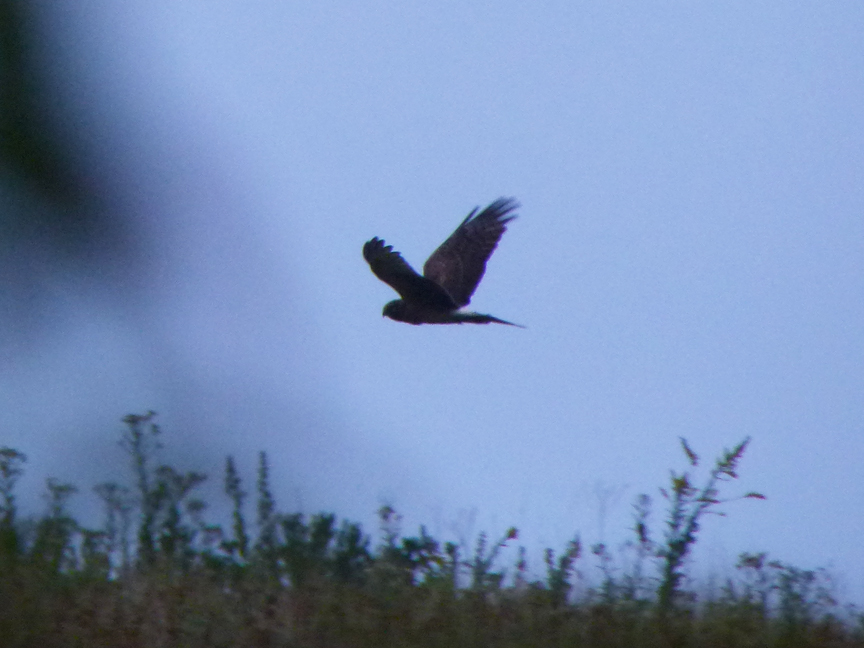
Northern harrier.
Thick, white fog blanketed the landscape when I first looked out the window this morning. Within a couple hours, the fog had lifted—and the day had darkened without its bright influence. And soon after that, it began to rain.
It was a hectic work day for me, as the 15th of every month has been for going on two years. But I stumbled through, got stuff done. In a way, the intermittent drizzle proved a blessing, because I didn’t feel the urge to go out cycling in it. By closing time, after the rain had held off for a while, Jack and I took off on our daily Beech Hill excursion, feeling lucky. We arrived to an empty lot—and a lovely, moody sky. In fact, a couple windows of blue had opened off over the bay.
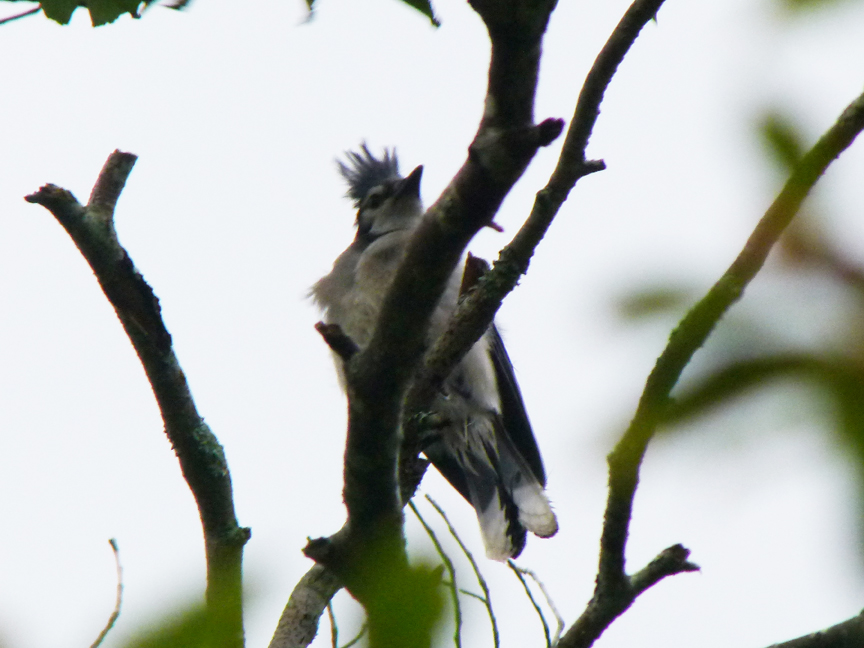
Blue jay.
Watched a family of blue jays flap about in the trees along the road. Heard the subtle slurred note of a towhee—this call, which I’ve only recently learned, sounds sort of like an understated version of the familiar human whistle that means “over here!”—and the caws of a crow and the voices of a chickadee and a white-throated sparrow. Then I saw the harrier.
I got only a fleeting glimpse of it as it soared low over the rise in front of us, but it reminded me that I’ll be seeing more of them after fall arrives (in a few short days). They seem to love hillsides cloaked in fall color. And the idea of harriers sparked a little inner excitement of the whole idea of hawks in fall.
One rainy autumn day years ago, as I stood looking northeast along the shore of a tidal estuary down the St. George peninsula, I had a wondrous experience: hawks, many hawks, varied hawks, all appearing out of a gray sky, all flying toward me. Small, streamlined falcons, accipiters like flying Ts, buteos in leisurely flight. Dozens, then hundreds of hawks. A miraculous, perhaps once-in-a-lifetime event. I just happened to be in the right place at the right time, I guess.
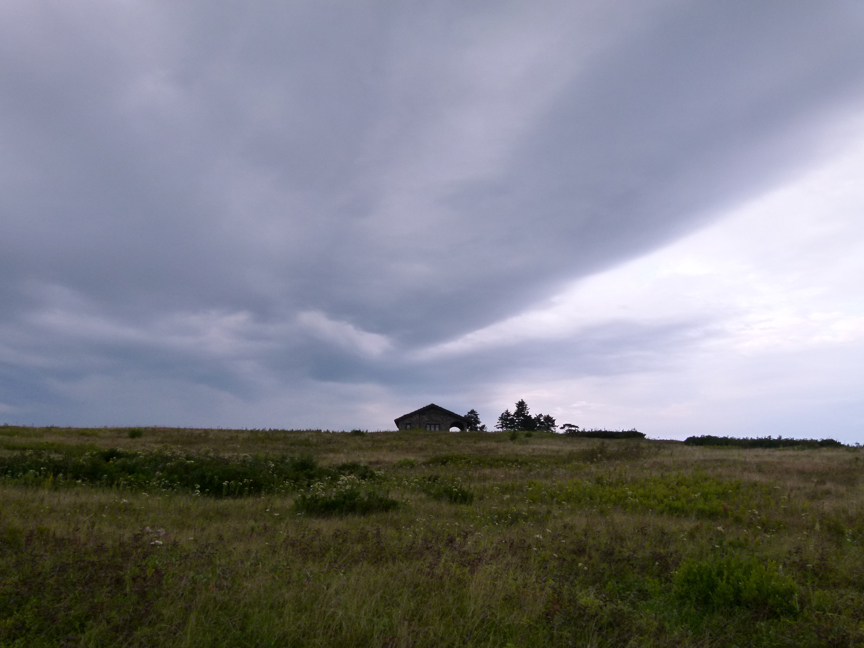
Beech Nut.
As I hope to be in the right place in a week or so, when I take the mail boat to Monhegan. I’ll see hawks out there, I’m sure of it. Peregrine falcons, sharp-shinned hawks, merlins, more harriers. Some autumn I’d like to travel to Panama to experience the famous Swainson’s hawk migration. I hear on a single day you can watch hundreds of thousands of the birds ride from thermal to thermal on their way to Argentina. They funnel through the isthmus because of a combination of feeding habits, weather patterns, energy expenditure—and the fact that few thermals occur over water.
At this time of year I begin to grow aware of an insistent, inner excitement. In part because of the sudden chill in the air (it’s gotten particularly cold out there tonight, in fact). In part because of some ancient urge to get busy, to prepare for winter. But in largest part, perhaps, because—like most bird spotters—I get a thrill from fall migration.
I looked for the hawk the whole way up the hill but never saw it again. Nor did I see or hear any other birds. Just as dog and I circled Beech Nut, a light rain began to fall. As we hurried down in it, feeling a prickle of discomfort, I couldn’t help but think of some people in Texas who would be dancing in the rain.
Beech Hill List
Beginning at 5:30 p.m., I hiked the open trail.
1. Blue jay
2. Eastern towhee (voice)
3. American crow (voice)
4. Black-capped chickadee (voice)
5. White-throated sparrow (voice)
6. Northern harrier
Elsewhere
7. Herring gull
Tags: American crow, black-capped chickadee, blue jay, eastern towhee, herring gull, northern harrier, white-throated sparrow

